
How to Edge a Lawn for a Neat and Clean Landscape
September 15, 2025
Backyard privacy is not just about putting up a fence anymore and Canadian homeowners are searching for better ways to create peaceful outdoor escapes. Surprisingly, private green spaces have been shown to improve mental health and reduce everyday stress. Instead of settling for bland barriers, more people are turning their backyards into personal sanctuaries that feel inviting and secure at the same time. Ready to discover how these new trends make outdoor privacy both practical and beautiful?
Table of Contents
- Understanding The Need For Backyard Privacy
- Fencing Solutions For Ultimate Seclusion
- Natural Barriers: Trees And Shrubs
- Privacy Screens And Outdoor Curtains
- Using Pergolas And Gazebos For Coverage
- Decorative Walls And Trellises
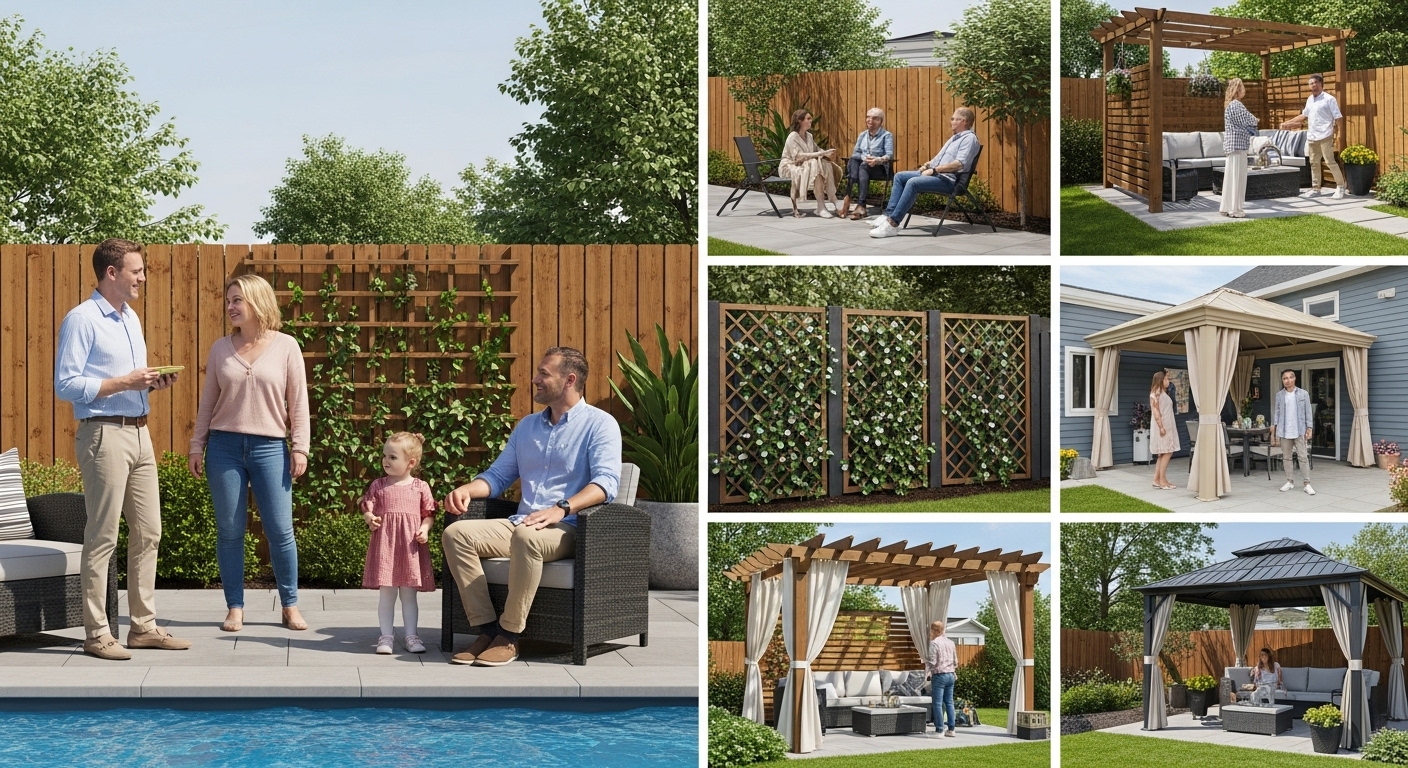
- Tips For Planning Your Privacy Layout
Quick Summary
| Takeaway | Explanation |
|---|---|
| Prioritize backyard privacy for mental well-being. | Creating private outdoor spaces reduces stress and enhances quality of life for homeowners. |
| Choose fencing that balances aesthetics and function. | Select durable and visually appealing materials to meet local regulations and personal preferences for effective privacy. |
| Incorporate natural barriers like trees and shrubs. | Planting evergreens and deciduous species creates living privacy screens that improve outdoor aesthetics and provide environmental benefits. |
| Utilize flexible solutions like screens or curtains. | Outdoor curtains and privacy screens can easily adapt to changing needs while enhancing visual privacy and comfort. |
| Plan a layered privacy layout for best results. | Combining various privacy elements, like fences, flora, and structures, creates comprehensive screening while maintaining aesthetic appeal. |
1: Understanding the Need for Backyard Privacy
Privacy has become increasingly crucial for homeowners seeking tranquility and personal space in their outdoor living areas. Modern residential landscapes face growing challenges with proximity, visibility, and noise from neighbours, making backyard privacy options not just a luxury but a necessity for mental well-being and quality of life.
According to research published by the National Institutes of Health, private green spaces contribute significantly to psychological health by providing personal refuge and reducing environmental stress. Homeowners recognize that a well-designed private backyard offers more than aesthetic appeal it creates a sanctuary where individuals can relax, unwind, and reconnect with themselves.
The primary motivations for implementing backyard privacy solutions include:
- Creating a personal retreat away from external visual intrusions
- Reducing noise pollution from neighbouring properties
- Enhancing overall property value and aesthetic appeal
- Establishing safe spaces for family activities and personal recreation
Understanding privacy needs requires homeowners to evaluate their specific landscape, architectural context, and personal comfort levels. Factors such as lot size, neighbourhood density, existing landscaping, and local bylaws all play critical roles in determining the most appropriate privacy strategies.
While privacy solutions vary widely, the goal remains consistent: transforming outdoor spaces into personal sanctuaries that offer comfort, security, and a sense of personal control. By carefully selecting and implementing strategic privacy options, homeowners can effectively create outdoor environments that feel both protected and inviting.
2: Fencing Solutions for Ultimate Seclusion
Fencing represents one of the most direct and effective approaches to establishing backyard privacy, offering homeowners a versatile range of materials and design options to create personalized visual barriers. Selecting the right fence requires balancing aesthetic preferences, budget considerations, and practical functionality.
Research from the American Fence Association indicates that strategic fence selection can increase property value while simultaneously addressing privacy concerns. Modern fencing solutions extend far beyond traditional wooden structures, presenting homeowners with innovative materials and design approaches.
Key factors to consider when selecting privacy fencing include:
- Material durability and maintenance requirements
- Local municipal regulations and height restrictions
- Aesthetic compatibility with existing landscape design
- Budget constraints and long-term investment potential
Wooden privacy fences remain a popular choice, offering classic aesthetics and excellent sound dampening characteristics. Cedar and pressure-treated pine provide natural resistance to weathering and insect damage, making them particularly suitable for Canadian climate conditions. Alternatively, vinyl fencing has gained significant traction due to its low maintenance requirements and consistent appearance.
For homeowners seeking contemporary solutions, composite materials and metal panels offer sleek, modern privacy options. These materials can be customized with perforated designs that provide visual screening while allowing controlled light and air circulation. Composite fencing, in particular, combines the visual warmth of wood with the durability of synthetic materials, creating a long-lasting privacy solution that withstands extreme weather variations.
Beyond material selection, strategic fence placement and thoughtful design can maximize privacy effectiveness. Incorporating slight angle variations, staggered heights, or integrated landscaping elements can transform a simple fence into a sophisticated privacy barrier that enhances overall outdoor aesthetic appeal.
3: Natural Barriers: Trees and Shrubs
Natural privacy barriers represent an elegant and environmentally friendly approach to creating secluded outdoor spaces. Living barriers offer dynamic solutions that evolve with your landscape, providing visual screening, noise reduction, and aesthetic enhancement simultaneously.
Research from the Canadian Urban Forest Network demonstrates that strategically planted trees and shrubs can significantly improve backyard privacy while contributing to local ecosystem health. Homeowners can transform their outdoor spaces into verdant, private retreats by selecting appropriate plant species and implementing thoughtful landscaping techniques.
Considerations for creating effective natural privacy barriers include:
- Growth rate and mature plant dimensions
- Local climate and soil conditions
- Maintenance requirements and pruning complexity
- Seasonal appearance and evergreen potential
Evergreen species like cedar, spruce, and juniper provide year-round privacy and wind protection. These dense, fast-growing trees create immediate visual barriers and excel in Canadian climate conditions. Cedars, particularly, offer rapid growth and tight foliage structure, making them ideal for creating quick and effective privacy screens.
Deciduous options such as ornamental trees and multi-stemmed shrubs offer seasonal variation and visual interest. Maple, birch, and flowering species can be strategically positioned to create layered privacy solutions that change throughout the year. Combining different plant heights and types creates depth and visual complexity in privacy landscaping.
Successful natural privacy barriers require careful planning and ongoing maintenance. Proper spacing, understanding growth patterns, and selecting native species compatible with local environmental conditions are crucial. Consulting with local landscape professionals can help homeowners design natural barriers that provide privacy, enhance property aesthetics, and support local biodiversity.
4: Privacy Screens and Outdoor Curtains
Privacy screens and outdoor curtains represent sophisticated, flexible solutions for homeowners seeking adaptable backyard privacy options. These modern alternatives offer dynamic visual barriers that can be easily adjusted to suit changing environmental conditions and personal preferences.
Research from the Pacific Northwest National Laboratory highlights the multifunctional benefits of exterior shade systems, demonstrating their effectiveness in creating privacy while simultaneously managing solar heat and environmental exposure.
Key advantages of privacy screens and outdoor curtains include:
- Lightweight and easily reconfigurable design
- Enhanced aesthetic flexibility
- Quick installation compared to permanent structures
- Ability to modify privacy levels instantaneously
Fabric-based privacy solutions come in diverse materials ranging from weather-resistant polyester to specialized UV-blocking textiles. Outdoor curtains crafted from marine-grade fabrics offer exceptional durability, resisting moisture, fading, and mechanical stress. Homeowners can select from neutral tones that blend seamlessly with existing landscape designs or choose bold colours that make dramatic visual statements.
Metal and wood privacy screens provide alternative options for those seeking more structured privacy solutions. Laser-cut metal panels featuring geometric patterns create intricate shadow play while blocking direct sightlines. Wooden screens with adjustable slats allow precise control over visibility and light transmission, enabling homeowners to customize their outdoor environment.
Modern privacy screens extend beyond mere visual barriers. Innovative designs incorporate additional functional elements like integrated lighting, sound absorption, and wind protection. Some advanced systems can be motorized, allowing remote control and automated positioning to adapt to changing sunlight and temperature conditions.
Successful implementation requires careful consideration of material compatibility, mounting options, and local weather patterns. Professional consultation can help homeowners select privacy solutions that balance aesthetic preferences with practical performance requirements.
5: Using Pergolas and Gazebos for Coverage
Pergolas and gazebos offer sophisticated architectural solutions for homeowners seeking comprehensive backyard privacy and functional outdoor living spaces. These structured additions transform ordinary backyards into elegant, secluded retreats that provide both visual screening and architectural interest.
Landscape Architecture Magazine emphasizes that well-designed outdoor structures can increase property value while creating versatile privacy zones that seamlessly integrate with existing landscape elements.
Considerations for selecting pergolas and gazebos include:
- Material durability and maintenance requirements
- Architectural compatibility with existing home design
- Potential for additional privacy enhancement
- Budget and long-term investment potential
Wooden pergolas represent a classic approach to outdoor privacy, offering natural aesthetic appeal and flexibility in design. Cedar and pressure-treated lumber provide exceptional resistance to Canadian weather conditions, ensuring long-lasting performance. Modern pergola designs incorporate adjustable fabric canopies, lattice panels, and climbing plant support structures that enhance privacy while creating dynamic, living architectural elements.
Gazebos provide more enclosed privacy solutions, offering comprehensive protection from surrounding environments. Fully enclosed gazebo designs can create intimate outdoor rooms that feel like extensions of interior living spaces. Materials range from traditional wood constructions to contemporary metal and composite designs, allowing homeowners to select options that complement their specific architectural preferences.
Advanced pergola and gazebo configurations can integrate additional privacy features such as retractable side panels, built-in screening elements, and strategic landscaping. Homeowners can customize these structures to create multilayered privacy solutions that adapt to changing environmental conditions and personal preferences.
Successful implementation requires careful planning, considering factors like sun exposure, wind patterns, and existing landscape characteristics. Professional design consultation can help maximize the functional and aesthetic potential of these sophisticated privacy solutions.
6: Decorative Walls and Trellises
Decorative walls and trellises offer homeowners sophisticated and visually engaging privacy solutions that transcend traditional barrier concepts. These architectural elements transform functional privacy needs into artistic landscape statements, creating dynamic outdoor spaces that balance screening and aesthetic appeal.
The Smithsonian Gardens highlights the historical significance of trellises, demonstrating their long-standing role in creating secluded garden environments while supporting decorative plant growth.
Key considerations for implementing decorative walls and trellises include:
- Material durability and weather resistance
- Aesthetic compatibility with existing landscape design
- Potential for integrated plant growth
- Maintenance requirements and long-term performance
Modern decorative walls combine multiple materials like metal, wood, and composite panels to create intricate privacy solutions. Laser-cut metal screens provide elegant visual barriers that cast sophisticated shadow patterns, transforming functional privacy elements into architectural art pieces. Wooden trellises with geometric designs offer structured frameworks for climbing plants, enabling homeowners to create living privacy barriers that evolve seasonally.
Vertical gardening techniques can significantly enhance trellis functionality, allowing homeowners to integrate privacy solutions with plant cultivation. Climbing roses, ivy, and native perennial vines transform these structures into dynamic, green privacy screens that change appearance throughout different seasons.
Customization options for decorative walls and trellises are virtually limitless. Homeowners can select modular designs that can be reconfigured, choose materials matching existing architectural styles, or incorporate lighting elements for enhanced evening ambiance. Some advanced designs feature movable panels, allowing precise control over privacy levels and visual exposure.
Successful implementation requires understanding local climate conditions, plant compatibility, and structural integrity. Professional landscape designers can help create tailored solutions that meet both aesthetic preferences and practical privacy requirements.
7: Tips for Planning Your Privacy Layout
Creating an effective backyard privacy layout requires strategic planning, careful consideration of environmental factors, and a holistic approach to landscape design. Successful privacy solutions integrate multiple elements to create comprehensive screening that feels natural and intentional.
Oklahoma State University Extension recommends defining vertical boundaries thoughtfully to achieve optimal privacy results that complement existing architectural features.
Critical considerations for privacy layout planning include:
- Understanding local zoning regulations and height restrictions
- Analyzing sunlight patterns and wind directions
- Evaluating existing landscape topography
- Budgeting for short-term installation and long-term maintenance
Layered privacy strategies prove most effective, combining multiple techniques to create comprehensive visual barriers. This might involve integrating fence structures with strategic tree plantings, or combining pergola installations with climbing plant systems. The goal is to create depth and visual complexity that prevents direct sightlines while maintaining aesthetic appeal.
Homeowners should conduct thorough site assessments before implementing privacy solutions. This involves measuring precise property lines, understanding microclimatic conditions, and identifying potential challenges like underground utilities or drainage patterns. Professional landscape consultations can provide invaluable insights into selecting privacy options that harmonize with specific environmental contexts.
Material selection plays a crucial role in privacy layout success. Choosing weather-resistant, low-maintenance materials ensures long-term performance and reduces ongoing maintenance requirements. Native plant selections offer additional benefits, providing privacy while supporting local ecosystem health and reducing water consumption.
Flexibility remains key in privacy design. Modular solutions that can be adjusted or reconfigured provide homeowners with adaptable options that can evolve alongside changing lifestyle needs. By approaching privacy as a dynamic, multilayered design challenge, homeowners can create outdoor spaces that feel both protected and inviting.
The following table provides a comprehensive overview of the 7 backyard privacy options discussed in this article, outlining their key features, benefits, and considerations for Canadian homeowners.
| Privacy Option | Key Features | Benefits | Considerations |
|---|---|---|---|
| Fencing Solutions | Variety of materials (wood, vinyl, composite, metal) | Strong visual barrier, increases property value | Material durability, maintenance, local bylaws |
| Natural Barriers (Trees & Shrubs) | Evergreens, deciduous species, layered plantings | Year-round privacy, environmental enhancement | Growth rate, mature size, climate compatibility |
| Privacy Screens & Outdoor Curtains | Flexible, adjustable, fabric/metal/wood options | Quick install, instant privacy, aesthetic flexibility | Weather durability, mounting, adaptability |
| Pergolas & Gazebos | Architectural structures, can include side panels | Adds style, extends living spaces, provides coverage | Material choice, placement, integration with design |
| Decorative Walls & Trellises | Artistic panels, supports climbing plants | Visual interest, dynamic seasonal privacy | Structural integrity, plant compatibility, maintenance |
| Layered Privacy Layout | Mix of multiple options for depth and effectiveness | Comprehensive screening, suited to unique properties | Needs planning, site assessment, professional input |
| Planning & Material Selection | Focus on needs, local rules, low-maintenance choices | Sustainable and long-term privacy solutions | Site assessment, budget, adaptability, flexible design |
Transform Your Backyard Into the Private Oasis You Deserve
Have you been dreaming of turning your outdoor space into a peaceful retreat where you and your family feel protected from prying eyes, noise, and distractions? The options outlined in “7 Backyard Privacy Options Every Homeowner Should Know”—from sturdy fencing and lush natural barriers to practical pergolas—are powerful solutions, but putting them into practice can feel overwhelming without experienced guidance. Many Calgary homeowners struggle with finding the right balance of privacy, style, and durability, especially when unique property sizes, local climate, and regulations come into play.

At Ace Landscapes, we specialize in personalizing backyard privacy with expert design, careful installation, and ongoing maintenance. We take your needs for seclusion, beauty, and relaxation and turn them into reality using proven methods—whether it is tree and shrub planting, custom fencing, or creative use of pergolas and trellises. Do not let another season go by without the comfort you deserve. Explore your options with our team today. Visit Ace Landscapes Calgary Landscaping to request a consultation and start building your private outdoor sanctuary.
Frequently Asked Questions
What are some effective fencing materials for backyard privacy?
Wood, vinyl, composite materials, and metal panels are popular choices. Wooden fences provide classic aesthetics and sound dampening, while vinyl requires low maintenance. Composite materials combine wood’s warmth with durability, and metal panels offer a sleek, modern look.
How can I enhance the effectiveness of natural privacy barriers like trees and shrubs?
Select fast-growing evergreen species, such as cedar and spruce, to create immediate visual barriers. Layer different plant heights and types to add depth and visual complexity, and consult local professionals for specialized advice on native plants and proper spacing.
What are the benefits of using outdoor curtains or privacy screens?
Outdoor curtains and privacy screens are lightweight, easily adjustable, and can quickly change privacy levels. They offer aesthetic flexibility, quick installation, and can protect against sun and wind while enhancing your backyard’s visual appeal.
How do pergolas and gazebos contribute to backyard privacy?
Pergolas and gazebos add structure and style, serving as both visual barriers and extensions of your home. They can be designed with adjustable elements like fabric canopies or side panels, allowing for customized privacy while enhancing outdoor living spaces.