

Understanding Energy Efficient Landscaping Principles
August 30, 2025
7 Modern Front Yard Ideas to Transform Your Space
September 1, 2025
A well-fed lawn can look stunning, but following a haphazard fertilizing routine often leads to patchy results and wasted effort. Yet, when you apply nutrients according to a planned schedule, the outcome is much more than visual appeal. Homeowners who use a proper lawn fertilization schedule can see their turf become up to 30 percent thicker and greener compared to those who fertilize at random times.
Below is a table summarising the distinct purposes and benefits of sticking to a lawn fertilization schedule versus fertilizing at random times.
| Approach | Lawn Thickness & Colour | Resilience & Root Health | Long-Term Lawn Quality |
|---|---|---|---|
| Structured Fertilization | Up to 30% thicker and greener | Stronger roots, better drought/pest resistance | Improved, predictable results |
| Random/Unplanned Fertilization | Patchy, less green | Weaker roots, increased vulnerability | Decreased quality, inconsistent |
| That means the secret to a lush, resilient yard is less about luck and more about precise timing and science. |
Table of Contents
- What Is A Lawn Fertilization Schedule And Its Purpose?
- Why Lawn Fertilization Matters For Grass Health
- How Lawn Fertilization Works: Key Nutrients And Their Roles
- Understanding Seasonal Considerations In Calgary
- Real-World Applications: Tailoring Schedules For Different Properties
Quick Summary
| Takeaway | Explanation |
|---|---|
| A fertilization schedule boosts lawn health | Implementing a structured fertilization plan enhances grass resilience and appearance throughout the growing season. |
| Apply fertilizers during specific seasons | Timing applications in spring and fall maximizes nutrient absorption for cool-season grasses in Calgary. |
| Understand nutrient roles for optimal growth | Key nutrients—nitrogen, phosphorus, and potassium—each play distinct roles in grass health and development. |
| Tailor strategies to property type | Different property types, like residential or commercial, require customized fertilization approaches based on usage and exposure. |
| Conduct soil tests for precise needs | Soil testing provides insights into nutrient requirements, allowing for targeted and effective fertilization strategies. |
What is a Lawn Fertilization Schedule and Its Purpose?
A lawn fertilization schedule represents a strategic plan for nourishing your grass throughout its growing season, ensuring optimal health and visual appeal. Unlike random nutrient applications, this systematic approach delivers precise nutrients at critical growth stages, transforming your lawn from basic greenery into a vibrant, resilient landscape.
Understanding the Core Purpose
The fundamental objective of a lawn fertilization schedule is supporting grass through its natural growth cycles. By providing targeted nutrition at specific times, homeowners can encourage stronger root development, enhance disease resistance, and promote uniform growth. Learn more about seasonal lawn care strategies that complement fertilization efforts.
Key purposes of a structured fertilization schedule include:
- Improving grass density and thickness
- Enhancing overall lawn colour and appearance
- Strengthening root systems for better drought tolerance
- Reducing vulnerability to pest and disease challenges
Nutrient Delivery and Timing
According to the University of Minnesota Extension, successful lawn fertilization depends on understanding grass type and regional climate conditions. Cool-season grasses, prevalent in Calgary, benefit most from fertilizer applications in spring and fall when root growth is most active. These periods allow nutrients to be efficiently absorbed and stored, preparing the lawn for summer stress and winter dormancy.
The science behind fertilization involves carefully balancing nitrogen, phosphorus, and potassium ratios. Each nutrient plays a critical role: nitrogen promotes leaf growth, phosphorus supports root development, and potassium enhances overall plant resilience. A well-designed lawn fertilization schedule considers these nutritional requirements and delivers them progressively throughout the growing season.
The following table outlines the primary nutrients essential for lawn health and summarises their specific roles in supporting grass growth and resilience.
| Nutrient | Main Function | Contribution to Lawn Health |
|---|---|---|
| Nitrogen | Promotes leaf growth, chlorophyll | Leads to vibrant green colour and dense growth |
| Phosphorus | Supports root development, energy transfer | Enhances root strength and establishment |
| Potassium | Improves plant strength, stress resistance | Increases drought tolerance and disease resistance |
| Micronutrients | Assist in metabolic functions | Help maintain overall plant vitality |
Why Lawn Fertilization Matters for Grass Health
Lawn fertilization transcends simple aesthetic improvements, serving as a critical mechanism for maintaining robust grass health and creating a resilient outdoor ecosystem. By understanding the profound impact of systematic nutrient management, homeowners can transform their lawn from a basic ground covering into a thriving, dynamic landscape.
Nutritional Foundation for Grass Survival
Grass, like all living organisms, requires balanced nutrition to survive and flourish. Fertilization provides essential macro and micronutrients that support fundamental biological processes. Explore our comprehensive seasonal lawn care strategies to understand holistic lawn maintenance.
Key nutritional requirements include:
- Nitrogen for vibrant green leaf growth
- Phosphorus to stimulate robust root development
- Potassium to enhance overall plant resilience
- Trace minerals supporting metabolic functions
Defending Against Environmental Challenges
According to research from the University of Minnesota Extension, proper fertilization dramatically improves a lawn’s capacity to withstand environmental stressors. Well-nourished grass develops deeper root systems, enabling better water and nutrient absorption during challenging periods like summer heat and winter cold.
Healthy, fertilized lawns demonstrate superior resistance to multiple environmental challenges. They can more effectively combat drought conditions, repel invasive weed species, and maintain structural integrity against physical and biological pressures. The strategic application of nutrients essentially creates a biological shield, protecting grass from potential damage and ensuring long-term lawn sustainability.
How Lawn Fertilization Works: Key Nutrients and Their Roles
Lawn fertilization is a sophisticated biological process that involves precisely delivering essential nutrients to support grass growth, health, and resilience. Understanding the intricate roles of different nutrients helps homeowners develop more effective lawn care strategies that go beyond superficial maintenance.
Primary Nutrient Dynamics
The foundation of successful lawn fertilization lies in comprehending the unique functions of key nutrients. Each element plays a specialized role in grass development and environmental adaptation. Explore our detailed guide to seasonal lawn maintenance to gain deeper insights into comprehensive nutrient management.
Key nutrients and their primary functions include:
- Nitrogen: Drives leaf growth and chlorophyll production
- Phosphorus: Stimulates root development and energy transfer
- Potassium: Enhances overall plant strength and stress resistance
- Micronutrients: Support complex metabolic processes
Scientific Principles of Nutrient Absorption
According to research from the USDA Forest Service, nutrient absorption is a complex biological mechanism. Grass roots actively draw nutrients from the soil, transforming them into energy and structural components. The effectiveness of this process depends on multiple factors, including soil pH, moisture levels, and the precise balance of available nutrients.
The absorption mechanism works like a sophisticated biological filter. Roots selectively take up required nutrients, converting them into compounds necessary for growth, photosynthesis, and cellular maintenance. This intricate process ensures that grass can adapt to varying environmental conditions, maintaining health and vitality throughout different seasonal challenges.
Understanding Seasonal Considerations in Calgary
Lawn fertilization in Calgary demands a nuanced approach that respects the region’s unique climate challenges and grass growth patterns. The dramatic seasonal variations require homeowners to adapt their nutrient management strategies to support grass health throughout the year.
Regional Climate Impact on Fertilization
Calgary’s cool-season grass environments experience distinct seasonal transitions that directly influence fertilization timing and techniques. Discover our comprehensive seasonal maintenance strategies to optimize your lawn care approach.
Key seasonal fertilization considerations include:
- Spring applications promote initial growth recovery
- Fall fertilization builds winter resilience
- Avoid mid-summer high-nitrogen applications
- Adjust nutrient ratios based on seasonal demands
Optimal Fertilization Windows
According to research from the University of Minnesota Extension, cool-season grasses benefit most from strategic fertilization windows. In Calgary’s climate, this translates to two primary application periods: early spring and late summer to early fall.
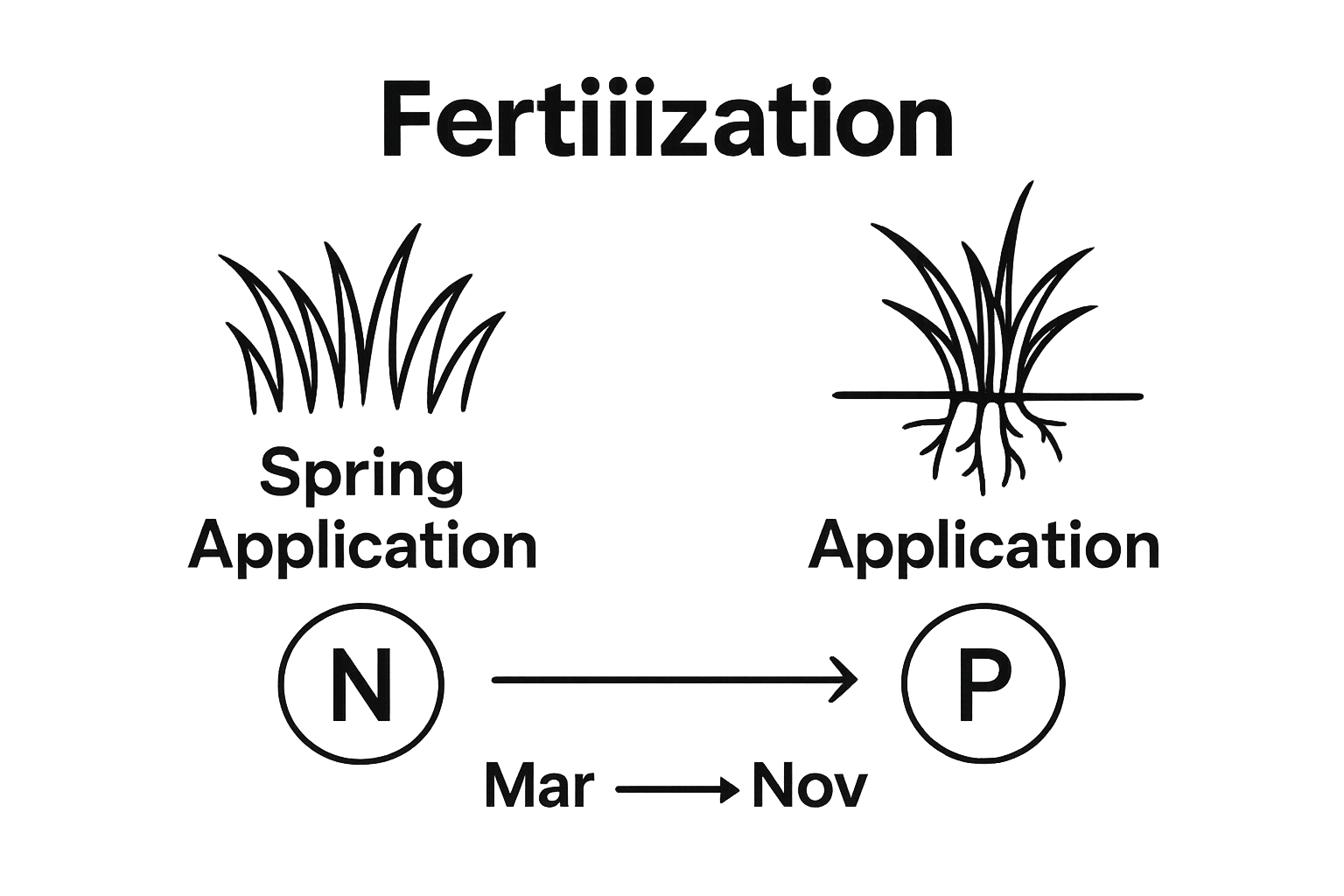
The early spring application, typically in late April or early May, helps grass recover from winter dormancy and jumpstart root development. However, the most critical fertilization period occurs from mid-August through mid-October. During this window, grass actively stores nutrients, building robust root systems that enhance winter survival and enable rapid spring recovery. By understanding these seasonal nuances, homeowners can create a targeted fertilization strategy that supports lawn health through Calgary’s challenging environmental transitions.
Real-World Applications: Tailoring Schedules for Different Properties
Lawn fertilization is not a one-size-fits-all approach. Different property types, soil conditions, and landscape characteristics demand customized nutrient management strategies that address unique environmental challenges and growth requirements.
Here’s a table comparing the fertilization focus for different property types, highlighting their unique needs and maintenance considerations.
| Property Type | Fertilization Priority | Typical Maintenance Focus |
|---|---|---|
| Residential Lawns | Aesthetic appeal, moderate durability | Even colour, soft feel, general robustness |
| Commercial Landscapes | Uniform appearance, high-traffic resilience | Consistent look, recovery from foot traffic |
| Sports Fields | Intensive nutrient demand, constant repair | Vigorous regrowth, quick recovery post-use |
| Public Green Spaces | Sustainability, low maintenance | Cost-effectiveness, minimal intervention |
Property Type Considerations
Residential, commercial, and municipal properties each present distinct fertilization needs based on grass usage, exposure, and maintenance intensity. Learn about our comprehensive property maintenance approaches to understand these nuanced requirements.
Key property-specific fertilization factors include:
- Residential Lawns: Focus on aesthetic appeal and moderate durability
- Commercial Landscapes: Prioritize uniform appearance and high-traffic resilience
- Sports Fields: Require intensive nutrient management for constant regeneration
- Public Green Spaces: Need sustainable, low-maintenance fertilization strategies
Soil and Environmental Adaptation
According to research from the University of Minnesota Extension, successful fertilization depends on understanding specific environmental parameters. Factors like soil pH, organic matter content, sunlight exposure, and moisture levels significantly influence nutrient absorption and grass health.
Professional lawn care experts recommend conducting soil tests to determine precise nutrient requirements. These tests reveal critical information about soil composition, enabling precise fertilizer selection and application. For instance, shaded areas might require different nitrogen levels compared to full-sun locations, and properties with high foot traffic demand more robust nutrient management to maintain grass structural integrity and rapid recovery capabilities.

Take the Guesswork Out of a Healthy Calgary Lawn
Struggling with patchy grass, weak roots, or confusing fertilization routines? If your lawn has not thrived despite your best efforts, you are not alone. Many Calgary homeowners and property managers face frustration when seasonal changes or improper nutrient timing affect lawn health and appearance. The right lawn fertilization schedule, tailored to local conditions and supported by expert care, can make all the difference. Let Ace Landscapes bring clarity and results, using proven strategies discussed in our article to nourish your grass at every crucial growth stage.

Stop settling for average results or wasting time on guessing. Our team specializes in seasonal lawn maintenance and property care, helping you build a resilient, lush landscape year-round. Visit https://acelandscapes.ca now to schedule your customized lawn assessment, see our portfolio, and secure your spot for expert fertilization and complete outdoor maintenance. This growing season is the time to invest in real results. Reach out today and see the transformation your property deserves.
Frequently Asked Questions
What is a lawn fertilization schedule?
A lawn fertilization schedule is a systematic plan that outlines when and how to apply nutrients to your grass throughout its growing season, ensuring optimal health and growth.
Why is lawn fertilization important for grass health?
Lawn fertilization provides essential nutrients to support grass growth, enhances resilience against environmental stressors, and promotes a lush, green appearance by improving root development and thickness.
When is the best time to fertilize cool-season grasses in Calgary?
For cool-season grasses in Calgary, the best times to fertilize are early spring (late April to early May) and late summer to early fall (mid-August to mid-October) to support growth and nutrient storage.
How can I determine the right fertilizer for my lawn?
To determine the right fertilizer, conduct a soil test to assess nutrient deficiencies and soil conditions. This will help in selecting the appropriate fertilizer with balanced nitrogen, phosphorus, and potassium ratios tailored to your lawn’s specific needs.