Water Conservation Landscaping: Smart Solutions for Calgary Properties
August 17, 2025Top Irrigation System Benefits for Calgary Properties
August 19, 2025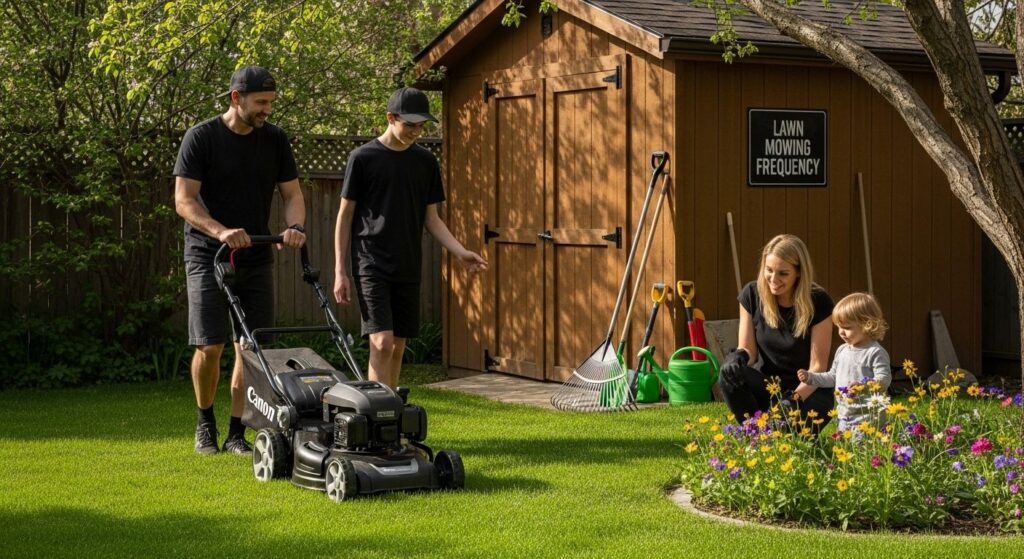
Lawn mowing in Calgary is anything but predictable. One week your grass might beg for a trim every three days and the next its growth slows to a crawl just as quickly. But here is a shocker. Lawns mowed every three weeks can actually support up to 2.5 times more flowering plants—boosting habitats for local pollinators and reducing maintenance time. That means less work could actually make your yard look better and help the environment at the same time.
Table of Contents
- Understanding Lawn Mowing Frequency In Calgary
- Factors Affecting How Often You Should Mow
- Best Practices For Different Property Types
- Seasonal Lawn Care Tips For Optimal Results
Quick Summary
| Takeaway | Explanation |
|---|---|
| Mow When Grass Reaches 3 Inches | Initiate the first mowing once the grass hits about 3 inches in height for optimal health. |
| Adjust Mowing Frequency Seasonally | Be prepared to mow every 3-5 days in spring, and adjust to less frequent mowing in summer’s slower growth. |
| Cut at Appropriate Heights | Maintain grass height between 3 to 3.5 inches during summer to guard against drought and heat stress. |
| Observe Grass Type and Growth | Different grass varieties have unique growth patterns; monitor them closely to determine mowing needs. |
| Keep Mower Blades Sharp | Sharp blades enable clean cuts, reducing stress and susceptibility to disease in the lawn. |
Understanding Lawn Mowing Frequency in Calgary
Managing lawn mowing frequency in Calgary requires a strategic approach that considers the unique climate, grass types, and seasonal variations specific to the region. Proper lawn maintenance goes beyond simple grass cutting and involves understanding the intricate balance between grass health, growth patterns, and environmental conditions.
Calgary’s Grass Growth Dynamics
Calgary’s prairie climate presents distinctive challenges for lawn care. The region experiences short summers and relatively long winters, which significantly impact grass growth cycles. According to the University of Minnesota Extension, maintaining a lawn height of 3 inches or higher promotes healthy growth and reduces weed competition. This recommendation becomes particularly crucial in Calgary’s variable climate.
Grass growth rates fluctuate dramatically throughout the growing season. In early spring, grass tends to grow rapidly, potentially requiring mowing every 3 to 4 days. As summer progresses and temperatures stabilize, the growth rate moderates, allowing for a more consistent mowing schedule. The key is adaptability and careful observation of your specific lawn’s needs.
Optimal Mowing Techniques for Local Conditions
Precision in lawn mowing frequency involves more than just cutting grass. Iowa State University Extension and Outreach recommends never removing more than one-third of the grass blade length in a single mowing. This principle helps maintain grass health, root strength, and overall lawn resilience.
For Calgary properties, this translates to adjusting mowing height seasonally. During peak summer months, keeping grass slightly longer (around 3 to 3.5 inches) helps protect the root system from heat stress and reduces water evaporation. In spring and fall, a slightly shorter cut of 2.5 to 3 inches promotes denser growth and prepares the lawn for seasonal transitions.
The variation in mowing frequency depends on several factors:
- Grass Type: Cool-season grasses common in Calgary, such as Kentucky bluegrass and perennial ryegrass, have different growth patterns compared to warm-season varieties.
- Moisture Levels: Precipitation and irrigation significantly impact grass growth rates.
- Temperature Fluctuations: Calgary’s temperature shifts can dramatically influence grass growth cycles.
Professional lawn care experts recommend monitoring your lawn closely and being prepared to adjust your mowing schedule weekly. During rapid growth periods, this might mean mowing twice a week, while during slower growth phases, once every 7 to 10 days might be sufficient.
A critical aspect often overlooked is mower maintenance. Sharp blades ensure clean cuts that promote grass health and prevent unnecessary stress. Dull blades tear grass instead of cutting cleanly, which can lead to browning and increased vulnerability to disease.
Ultimately, understanding lawn mowing frequency in Calgary is about developing a nuanced, responsive approach to lawn care. It requires observation, adaptability, and a willingness to adjust techniques based on your specific lawn’s characteristics and the current environmental conditions.
Factors Affecting How Often You Should Mow
Determining the optimal lawn mowing frequency involves a complex interplay of multiple environmental and biological factors. Homeowners in Calgary must understand these nuanced elements to maintain a healthy, vibrant lawn that can withstand the region’s unique climatic challenges.
Grass Species and Growth Characteristics
The type of grass in your lawn plays a critical role in determining mowing frequency. According to the University of Minnesota Extension, mowing requirements vary significantly between different grass species. Cool-season grasses prevalent in Calgary, such as Kentucky bluegrass and perennial ryegrass, have distinct growth patterns that directly impact how often you should mow.
Cool-season grasses typically experience two primary growth spurts annual those being early spring and early fall. During these periods, grass can grow rapidly, potentially requiring mowing every 3 to 5 days. The goal is to maintain consistent height without removing more than one-third of the grass blade in a single mowing session, which can stress the turf and compromise its health.
Environmental Conditions and Growth Dynamics
Rutgers Cooperative Extension emphasizes that mowing frequency should be determined by grass growth rate rather than adhering to a rigid calendar schedule. Several key environmental factors influence this growth rate:
- Temperature: Warmer temperatures accelerate grass growth, increasing mowing frequency during summer months.
- Precipitation and Irrigation: Higher moisture levels promote faster grass growth, necessitating more frequent mowing.
- Soil Fertility: Well-fertilized lawns experience more rapid growth, requiring more frequent cutting.
- Sunlight Exposure: Areas with more direct sunlight tend to have faster grass growth compared to shaded regions.
In Calgary’s variable climate, these factors can change dramatically within a single growing season. Homeowners must remain adaptable and observant, adjusting their mowing schedule based on current lawn conditions rather than following a rigid predetermined pattern.
Lawn Health and Maintenance Strategies
Proper mowing is not just about frequency but also about technique. Consistently maintaining the correct grass height promotes root development, reduces weed competition, and enhances overall lawn resilience. Different seasons require slightly different approaches:
- Spring: More frequent mowing as grass experiences rapid growth
- Summer: Moderate mowing frequency with slightly longer grass height to protect against heat stress
- Fall: Increased mowing to prepare the lawn for winter dormancy
Additionally, external factors such as recent fertilization, recent aeration, or overseeding can temporarily impact mowing requirements. After these lawn care interventions, you might need to adjust your mowing schedule to support optimal grass recovery and growth.
Ultimately, successful lawn maintenance in Calgary requires a holistic approach. By understanding the intricate relationship between grass species, environmental conditions, and lawn care practices, homeowners can develop a nuanced mowing strategy that promotes a healthy, robust lawn capable of thriving in the region’s challenging climate.
Best Practices for Different Property Types
Lawn mowing strategies are not one-size-fits-all. Different property types in Calgary require tailored approaches that consider unique characteristics such as landscape design, terrain, and specific environmental conditions. Understanding these nuanced requirements ensures optimal lawn health and aesthetic appeal.
Residential Property Lawn Management
Residential properties present diverse challenges depending on lawn size, grass type, and landscape layout. According to the University of Wisconsin Extension, maintaining grass height between 2.5 to 3.5 inches is crucial for overall lawn health. This recommendation becomes particularly important for residential properties where aesthetic appeal and lawn vitality are primary concerns.
Homeowners should adapt mowing frequency based on seasonal growth patterns. During rapid spring growth, mowing might be required twice weekly, while summer months may see reduced frequency. Residential lawns benefit from consistent maintenance, with particular attention to edges, corners, and areas around landscaping features.
Commercial and Large Property Considerations
Commercial properties and larger landscapes demand a more strategic approach to lawn maintenance. These properties often require specialized equipment and more comprehensive maintenance plans. The ecological impact of mowing becomes more significant in larger spaces.
Interestingly, research from the U.S. Forest Service reveals that less frequent mowing can actually benefit local ecosystems. Their study found that lawns mowed every three weeks supported up to 2.5 times more flowering plants, creating enhanced habitats for pollinators like bees. For commercial properties with extensive green spaces, this approach can provide both ecological benefits and reduced maintenance costs.
Specialized Property Types
Certain property types require unique mowing considerations:
- Sloped Properties: Require careful mowing techniques to prevent soil erosion and ensure even grass cutting
- Properties with Diverse Landscaping: Need precision mowing around garden beds, trees, and decorative elements
- High-Traffic Areas: Demand more resilient grass varieties and potentially more frequent maintenance
Properties near natural areas or with ecological preservation goals might benefit from modified mowing practices. For instance, allowing some areas to grow slightly longer can support local wildlife and reduce overall maintenance requirements.
Professional lawn care services can provide customized solutions that account for specific property characteristics. They can assess factors like soil composition, sunlight exposure, drainage patterns, and existing landscaping to develop a tailored mowing strategy.
Below is a table comparing lawn mowing considerations for residential, commercial, and specialized property types in Calgary, highlighting unique requirements and recommended approaches for each.
| Property Type | Mowing Height | Frequency Guidance | Unique Considerations |
|---|---|---|---|
| Residential | 2.5–3.5 inches | 1–2 times/week | Focus on aesthetics, attention to edges |
| Commercial/Large | 3+ inches possible | Less frequent (up to every 3 weeks) | Supports pollinators, reduces maintenance cost |
| Specialized (e.g., slopes, high-traffic areas) | Varies | As needed | Prevent erosion, mow carefully near landscaping |
Technology is also transforming lawn care approaches. Some commercial properties now utilize GPS-guided mowing equipment that ensures precise, consistent cutting across large areas. For residential properties, robotic mowers are becoming increasingly popular, offering consistent maintenance with minimal human intervention.
The key to successful lawn mowing across different property types lies in adaptability, observation, and a willingness to adjust techniques based on specific environmental conditions. By understanding the unique requirements of each property, homeowners and property managers can maintain healthy, attractive lawns that enhance outdoor spaces and support local ecosystems.
Seasonal Lawn Care Tips for Optimal Results
Maintaining a healthy lawn in Calgary requires a strategic approach that adapts to the unique challenges presented by each season. Effective lawn care goes beyond simple mowing, involving a comprehensive understanding of how seasonal changes impact grass growth, health, and overall landscape resilience.
Spring Lawn Care Strategies
Spring marks the critical renewal period for lawns in Calgary. According to Iowa State University Extension and Outreach, early spring is the time to establish foundational lawn care practices. Mowing Kentucky bluegrass lawns at a height of 2.5 to 3 inches during this season promotes healthy growth and prepares the turf for the upcoming summer months.
Key spring lawn care considerations include:
- Initial Cleanup: Remove winter debris, dead grass, and fallen branches
- First Mowing: Wait until grass reaches approximately 3 inches in height
- Soil Preparation: Assess and address any compaction or drainage issues
- Early Fertilization: Apply a light, balanced fertilizer to support initial growth
During spring, mowing frequency increases as grass enters its most active growth phase. Homeowners should be prepared to mow more frequently, potentially every 4 to 5 days, depending on grass growth rate and weather conditions.
Summer Maintenance Techniques
Ohio State University Extension emphasizes the importance of adapting mowing practices during the intense summer months. The recommended mowing height increases to 3 to 3.5 inches, which helps protect the grass from heat stress and reduces water evaporation.
Critical summer lawn care tips include:
- Mowing When Dry: Always mow when grass is dry to prevent disease spread
- Height Management: Maintain slightly longer grass to protect against heat
- Watering Strategy: Water deeply but less frequently to encourage deep root growth
- Stress Reduction: Avoid mowing during extreme heat periods
The University of California’s Integrated Pest Management Program recommends removing no more than one-third of the grass blade length per mowing. This principle becomes especially crucial during summer when grass is under maximum environmental stress.
Autumn and Winter Preparation
Autumn represents a critical transition period for lawn care in Calgary. As temperatures cool, grass enters a final growth phase before winter dormancy. Mowing height can be gradually reduced, preparing the lawn for winter protection.
Key autumn lawn care strategies:
- Gradual Height Reduction: Slowly lower mowing height as growth slows
- Leaf Management: Remove fallen leaves to prevent grass suffocation
- Final Fertilization: Apply a winterizing fertilizer to support root health
- Equipment Maintenance: Prepare and service lawn care equipment
Winter preparation involves more than just mowing. Homeowners should focus on protecting the lawn from potential winter damage by maintaining proper grass height, ensuring good drainage, and minimizing foot traffic on frozen grass.
Successful seasonal lawn care requires a holistic approach that considers the intricate relationship between mowing practices, environmental conditions, and grass health. By understanding and implementing these seasonal strategies, Calgary homeowners can maintain a robust, attractive lawn that withstands the region’s challenging climate variations.
The table below summarizes how lawn mowing practices should be adjusted for Calgary’s different seasons, including recommended mowing height, mowing frequency, and special care tips.
| Season | Recommended Mowing Height | Typical Mowing Frequency | Key Tips |
|---|---|---|---|
| Spring | 2.5–3 inches | Every 3–5 days | Remove debris, fertilize early |
| Summer | 3–3.5 inches | Every 5–7 days | Mow when dry, water deeply |
| Autumn | Gradually lower to ~2.5 inches | Every 5–7 days | Remove leaves, apply winter fertilizer |
| Winter Prep | Do not mow—dormant | N/A | Maintain equipment, manage foot traffic |
Frequently Asked Questions
How often should I mow my lawn in Calgary?
You should mow your lawn every 3 to 5 days during the rapid growth phases in spring, while in summer, you may only need to mow every 5 to 7 days.
What is the ideal grass height for mowing in Calgary during summer?
Aim to maintain your grass height between 3 to 3.5 inches during the summer to protect against heat stress and reduce water evaporation.
What factors influence how often I should mow my lawn?
Mowing frequency is influenced by grass type, environmental conditions like temperature and moisture, and the overall health of your lawn.
Should I sharpen my mower blades regularly?
Yes, keeping your mower blades sharp is crucial as it ensures clean cuts, which reduces stress on the grass and prevents disease vulnerability.
Ready for Effortless Lawn Mowing Results in Calgary?
Are you struggling to keep up with Calgary’s unpredictable lawn mowing schedule? If worrying about grass length, seasonal growth surges, or managing drought-resistant heights is taking precious time from your week, it might be time to let professionals handle your lawn’s unique rhythm. When it comes to supporting local pollinators, making clean mower cuts, or dealing with spring and summer growth spurts, you can trust Ace Landscapes to use best practices—keeping your lawn healthy with proven maintenance.
Why wait and let your lawn fall behind? Contact Ace Landscapes today and discover the difference that expert guidance can make for your property. Whether you want a tailored maintenance plan or a one-time cleanup, our Calgary-based team is always ready to help you achieve lasting curb appeal and save time. Visit https://acelandscapes.ca now to see how easy great lawn care can be.