
Understanding Lawn Fertilization Schedule for Healthy Grass
August 31, 2025
Understanding Flood Control Landscaping for Effective Spaces
September 2, 2025
Front yards are getting a serious upgrade as homeowners rethink the balance between beauty and practicality. Sure, many people still picture the classic patch of grass and a few shrubs. But studies show that using fewer elements in your front yard design actually makes a much stronger visual impact. Modern design trends are flipping tradition on its head, proving that simplicity, sustainability, and creativity can completely transform any outdoor space.
Table of Contents
- Embrace Minimalist Landscaping For Simplicity
- Use Native Plants For Easy Maintenance
- Incorporate Sustainable Features Like Rain Gardens
- Add Decorative Pathways For Visual Appeal
- Install Modern Outdoor Lighting For Safety
- Create Multi-Functional Spaces With Furnishings
- Consider Colorful Hardscaping To Enhance Aesthetics
Quick Summary
| Takeaway | Explanation |
|---|---|
| Embrace minimalist landscaping for elegance | Create sleek outdoor spaces by reducing ornamental complexity and focusing on strategic design elements. |
| Choose native plants for easier maintenance | Utilizing native species ensures lower maintenance and better adaptation to local environmental conditions. |
| Incorporate rain gardens for sustainability | Rain gardens effectively manage stormwater while creating functional and beautiful landscapes that support biodiversity. |
| Design decorative pathways for visual interest | Thoughtfully crafted pathways turn simple walkways into engaging features that enhance landscape character and navigation. |
| Utilize modern outdoor lighting for safety | Strategic lighting not only improves safety but also enhances aesthetic appeal, creating inviting outdoor environments. |
1: Embrace Minimalist Landscaping for Simplicity
Modern front yard ideas are revolutionizing outdoor spaces by embracing simplicity and clean design principles. Minimalist landscaping transforms traditional yard concepts into sleek, purposeful environments that reduce maintenance while maximizing aesthetic appeal.
Minimalist landscaping focuses on creating uncluttered, streamlined outdoor spaces that communicate elegance through deliberate design choices. According to research from the University of Missouri Extension, this approach minimizes resource consumption and maintenance requirements while delivering visual sophistication.
Key elements of minimalist front yard design include:
-
Strategic plant selection using native, low maintenance species
-
Clean geometric hardscaping with simple lines and neutral color palettes
-
Intentional negative space that creates visual breathing room
Homeowners seeking modern front yard ideas can achieve remarkable transformations by reducing ornamental complexity. Fewer elements create more visual impact, allowing each carefully chosen component to stand out. Utilizing indigenous plants, creating symmetrical layouts, and implementing monochromatic color schemes are powerful strategies for achieving this aesthetic.
For those interested in exploring compact design solutions, learn more about landscape design for small spaces.
Minimalist landscaping represents more than an aesthetic choice—it is a thoughtful approach to creating outdoor environments that are both visually compelling and environmentally responsible. By prioritizing simplicity, functionality, and deliberate design, homeowners can craft front yards that reflect contemporary sensibilities while reducing long-term maintenance demands.
2: Use Native Plants for Easy Maintenance
Transforming your front yard into a thriving, low-maintenance landscape begins with selecting native plant species adapted to local environmental conditions. Native plants offer numerous advantages that make them essential for modern front yard designs, providing both ecological benefits and aesthetic appeal.
Native plants are naturally equipped to survive in specific regional climates, requiring minimal intervention and resources. According to research from the EPA, indigenous plant species contribute significantly to local ecosystem health while reducing water consumption and maintenance demands.
Key benefits of incorporating native plants in your front yard include:
-
Exceptional drought resistance and climate adaptability
-
Minimal fertilizer and pesticide requirements
-
Enhanced support for local pollinators and wildlife
Selecting the right native plants involves understanding your specific microclimate and soil conditions. Alberta provides a diverse range of native plant options suitable for front yard landscaping, such as prairie grasses, wildflowers, and compact shrubs that thrive in challenging environmental conditions.
For homeowners seeking sustainable landscaping solutions, discover our approach to eco-friendly property design. Native plant selections not only reduce maintenance efforts but also create visually dynamic landscapes that change beautifully throughout seasonal transitions.
By prioritizing native plant species, homeowners can create front yards that are both environmentally responsible and aesthetically compelling. These plants represent a smart investment in landscape design, offering long-term sustainability, reduced maintenance costs, and a connection to the natural local ecosystem.
3: Incorporate Sustainable Features Like Rain Gardens
Modern front yard design is evolving to prioritize environmental responsibility, with rain gardens emerging as a sophisticated sustainable landscaping solution. These innovative landscape features offer remarkable ecological benefits while creating visually stunning outdoor spaces that manage water resources intelligently.
Rain gardens are strategically designed shallow depressions that capture stormwater runoff, filtering pollutants and reducing erosion. According to research from the University of Massachusetts, these landscaping features provide critical environmental services by naturally managing water flow and supporting local ecosystem health.
Key considerations for implementing rain gardens include:
-
Selecting native plant species with deep root systems
-
Positioning gardens in natural drainage areas
-
Ensuring proper soil composition for optimal water absorption
Water management becomes an aesthetic design element when integrating rain gardens into front yard landscapes. These features transform stormwater from a potential problem into a beautiful, functional landscape component that supports local biodiversity and reduces municipal water infrastructure strain.
Explore sustainable landscape design techniques that can help homeowners create environmentally responsive outdoor spaces. Rain gardens not only manage water effectively but also provide habitat for local wildlife, create visual interest, and demonstrate a commitment to ecological stewardship.
By thoughtfully incorporating rain gardens, homeowners can transform their front yards into intelligent, beautiful landscapes that work in harmony with natural environmental systems. This approach represents a forward-thinking strategy for landscape design that balances aesthetic appeal with environmental responsibility.
4: Add Decorative Pathways for Visual Appeal
Decorative pathways transform front yards from ordinary spaces into compelling landscape designs, creating visual narratives that guide visitors through outdoor environments. Modern pathway design combines functional movement with artistic expression, turning simple walking routes into integral elements of landscape architecture.
Pathway materials and design choices dramatically influence a front yard’s overall aesthetic and character. Contemporary landscape designers are moving beyond traditional concrete walkways, exploring innovative materials and creative configurations that enhance visual interest and complement architectural styles.
Key considerations for designing decorative pathways include:
-
Selecting materials that complement existing architectural elements
-
Creating fluid, natural movement through landscape
-
Incorporating varied textures and color palettes
Materials like natural stone, geometric concrete pavers, permeable gravel, and recycled composite materials offer unique opportunities for creative expression. Curved pathways can create a sense of mystery and movement, while geometric designs provide structure and precision.
Discover innovative landscape design techniques that can help homeowners maximize visual impact through strategic pathway planning. Successful pathway design considers not just aesthetic appeal, but also practical elements like drainage, durability, and ease of maintenance.
Pathways serve as more than mere functional connections between spaces. They are visual storytellers that communicate a property’s personality, create spatial rhythm, and invite exploration. By thoughtfully integrating decorative pathways, homeowners can elevate their front yard from a simple transitional space to an engaging, dynamic landscape experience.
5: Install Modern Outdoor Lighting for Safety
Modern outdoor lighting transforms front yards from simple spaces into secure, visually stunning environments. Contemporary lighting solutions go far beyond traditional functionality, offering homeowners innovative ways to enhance safety, aesthetic appeal, and property value simultaneously.
According to research from the Centers for Disease Control and Prevention, strategic outdoor lighting plays a critical role in preventing accidents and improving overall home safety. Thoughtful illumination creates layers of protection while dramatically enhancing landscape aesthetics.
Key considerations for modern outdoor lighting design include:
-
Selecting energy efficient LED technologies
-
Creating layered lighting with multiple illumination sources
-
Positioning lights to eliminate dark shadows and potential hazard zones
Smart lighting technologies enable homeowners to customize illumination experiences, integrating motion sensors, programmable systems, and color-changing capabilities. These advanced solutions provide enhanced security while allowing creative expression through light placement and intensity.
Explore our comprehensive landscape lighting solutions that blend safety, efficiency, and design elegance. Modern outdoor lighting serves multiple purposes: deterring potential intruders, highlighting landscape features, improving navigation, and creating welcoming evening environments.
By implementing strategic lighting designs, homeowners can transform their front yards into safe, inviting spaces that seamlessly blend technological innovation with aesthetic sophistication. Lighting becomes more than a functional necessity—it emerges as a dynamic design element that enhances property character and provides peace of mind.
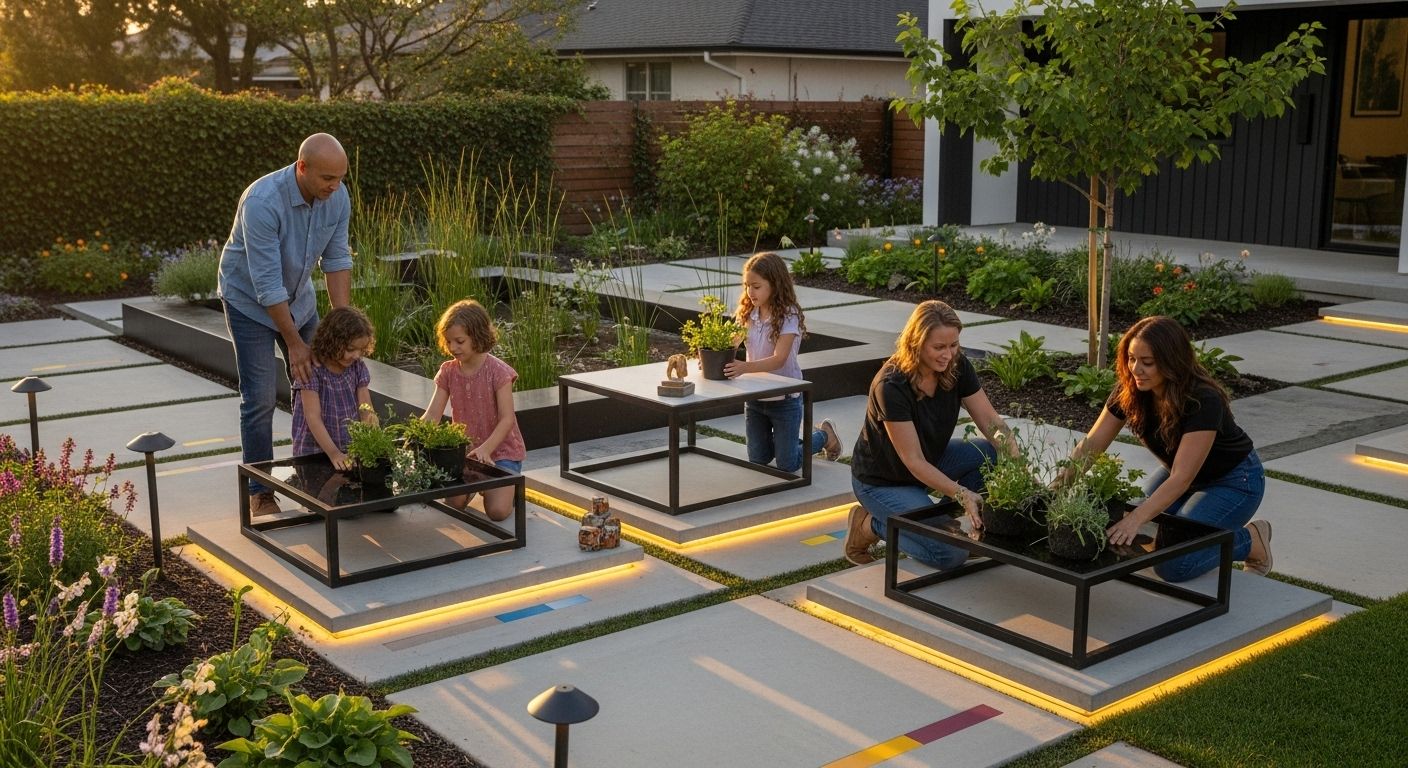
6: Create Multi-Functional Spaces with Furnishings
Modern front yards are evolving beyond traditional landscaping into flexible, purposeful outdoor living environments. Transforming exterior spaces with strategic furnishings allows homeowners to maximize utility and create dynamic areas that seamlessly blend aesthetics with functionality.
According to research from the Mississippi State University Extension Service, outdoor spaces can be designed to accommodate multiple functions, much like interior rooms. This approach enables homeowners to create versatile environments that serve diverse purposes throughout different times of day.
Key considerations for creating multi-functional front yard spaces include:
-
Selecting weather-resistant, adaptable furniture pieces
-
Designing flexible zones for relaxation, socializing, and recreation
-
Integrating furniture that complements existing landscape design
Modular furniture and compact design solutions enable intelligent space utilization, allowing even smaller front yards to become dynamic, engaging environments. Contemporary furnishings like convertible seating, movable planters, and compact tables transform outdoor areas into extensions of living spaces.
Discover innovative landscape design strategies that help homeowners maximize outdoor potential. By thoughtfully selecting and positioning furnishings, front yards can become welcoming gathering spaces that reflect personal style and functional needs.
The art of creating multi-functional front yard spaces lies in understanding how furniture can define, divide, and activate outdoor areas.
Below is a comprehensive table summarizing the seven modern front yard ideas highlighted in the article, providing an overview of the core strategies, features, and key benefits for transforming your outdoor space.
| Modern Front Yard Idea | Core Features/Steps | Key Benefits |
|---|---|---|
| Minimalist Landscaping | Use fewer elements, geometric hardscaping, intentional negative space | Sleek appearance, low maintenance, modern elegance |
| Use of Native Plants | Select local drought-resistant species, tailor to soil and microclimate | Easy maintenance, sustainability, supports wildlife |
| Incorporate Sustainable Features (Rain Gardens) | Create planted depressions for stormwater, use deep-rooted natives | Manages water runoff, promotes biodiversity, eco-friendly |
| Decorative Pathways | Employ varied materials and creative layouts, align with home architecture | Enhances visual interest, guides movement, improves curb appeal |
| Modern Outdoor Lighting | Install layered, energy-efficient LEDs, use smart controls, illuminate key areas | Boosts safety, highlights landscaping, increases property value |
| Multi-Functional Spaces with Furnishings | Use weather-resistant modular furniture, create flexible zones, integrate with design | Maximizes space use, encourages outdoor living, adds versatility |
| Colourful Hardscaping | Apply coloured concrete, decorative stones, balance bold and neutral tones | Adds personality, creates dynamic visuals, withstands weathering |
7: Consider Colorful Hardscaping to Enhance Aesthetics
Modern front yard design transcends traditional green landscaping, incorporating vibrant hardscaping elements that transform outdoor spaces into artistic expressions. Colorful hardscaping introduces dynamic visual interest, creating engaging landscapes that reflect personal style and architectural character.
According to research from the University of Florida Institute of Food and Agricultural Sciences, strategic use of color in hardscaping materials can dramatically enhance a property’s aesthetic appeal and visual complexity. Homeowners can leverage diverse materials like colored concrete, decorative stones, and unique pavers to craft compelling landscape narratives.
Key considerations for implementing colorful hardscaping include:
-
Selecting materials that complement existing architectural styles
-
Balancing bold color choices with neutral background elements
-
Ensuring color durability and resistance to weathering
Innovative hardscaping techniques transform front yards from passive spaces into dynamic visual experiences. By integrating colored retaining walls, mosaic stone pathways, and textured concrete elements, homeowners can create layered, visually engaging landscapes that capture attention and express individual creativity.
Explore advanced hardscaping design techniques that help transform ordinary outdoor spaces into extraordinary visual statements. Thoughtful color selection and material integration enable homeowners to craft front yards that are not just functional spaces, but genuine works of outdoor art.
Colorful hardscaping represents a sophisticated approach to landscape design, where materials become a medium for personal expression. By carefully selecting and combining colors, textures, and materials, homeowners can create front yards that are both visually stunning and uniquely representative of their personal aesthetic sensibilities.
Ready to Bring Your Modern Front Yard Vision to Life?
After learning about innovative ways to transform your front yard with minimalist landscaping, sustainable features, and eye-catching hardscaping, you may feel excited but unsure where to start. Many homeowners worry about choosing the right plants, balancing style with easy maintenance, or designing a unique outdoor space that truly stands out. The beauty of a modern front yard is within reach, and you do not have to tackle it alone.

Let Ace Landscapes turn your ideas into reality with our personalized design and expert installation services. Our Calgary-based team specializes in everything from native plant selection to custom hardscaping and efficient outdoor lighting. Discover more about our full-service approach at Ace Landscapes and see how our commitment to quality and attention to detail can help you achieve the front yard you have always wanted. Ready for curb appeal that gets noticed? Contact us now to book your consultation and experience the difference today.
Frequently Asked Questions
What is minimalist landscaping and how can it benefit my front yard?
Minimalist landscaping focuses on simplicity and clean design, using fewer decorative elements to create visual impact. It reduces maintenance needs and water consumption while creating a modern, elegant aesthetic in your front yard.
How do I choose the right native plants for my front yard?
Selecting native plants involves considering your local climate and soil conditions. Research plants native to your region that require minimal maintenance and provide benefits like drought resistance and support for local wildlife.
What are the advantages of incorporating rain gardens in front yard designs?
Rain gardens are designed to manage stormwater runoff effectively. They filter pollutants, prevent soil erosion, and support local ecosystems, all while enhancing the visual appeal of your front yard with beautiful native plantings.
How can decorative pathways enhance the aesthetics of my front yard?
Decorative pathways bring visual interest to your front yard by guiding visitors through the landscape. Using diverse materials and creative designs, pathways can complement your home’s architecture, create a sense of flow, and improve overall curb appeal.