
Understanding the Watering Schedule for Lawns
August 28, 2025
Understanding Energy Efficient Landscaping Principles
August 30, 2025
Yard drainage might sound simple but it is at the heart of protecting your home from water damage and unexpected repairs. You might think a bit of standing water is nothing to stress about but unaddressed drainage problems can chop a property’s structural integrity by up to 40 percent over time. Most surprising, the right drainage system does more than keep your basement dry it actually creates a healthier, greener outdoor space that lasts for years.
Table of Contents
- What Is Yard Drainage And Why Does It Matter?
- The Impact Of Poor Drainage On Properties
- How Yard Drainage Solutions Function
- Key Concepts In Yard Drainage Systems
- Real-World Applications Of Yard Drainage Solutions
Quick Summary
| Takeaway | Explanation |
|---|---|
| Effective drainage prevents property damage | Proper yard drainage stops water from pooling, which can lead to structural and foundation issues over time. |
| Neglected drainage leads to costly repairs | Ignoring drainage needs can result in extensive damage, costing homeowners thousands in repairs for structural and landscape problems. |
| Soil type affects drainage solutions | Different soils, especially clay, influence how water is absorbed and thus require tailored drainage strategies for effectiveness. |
| Investing in drainage maintains property value | Implementing proper drainage systems protects your investment, ensuring your property retains its value and avoids future issues. |
| Advanced systems promote ecological balance | Innovative drainage techniques not only manage water but also support environmental health and biodiversity in landscaping efforts. |
What is Yard Drainage and Why Does it Matter?
Yard drainage is a critical landscape management strategy that protects your property from water-related damage and environmental challenges. At its core, yard drainage involves systematically redirecting water flow to prevent accumulation, erosion, and potential structural issues around your home or commercial property.
The Science Behind Water Management
Water naturally follows the path of least resistance, which means without proper drainage, it can pool in low-lying areas, saturate soil, and create significant problems. Effective yard drainage solutions work by understanding topography, soil composition, and water movement patterns. Proper drainage ensures that rainwater, snowmelt, and other moisture sources are channeled away from buildings, preventing potential foundation damage, basement flooding, and landscape degradation.
The geological characteristics of your property play a crucial role in determining drainage needs. Different soil types absorb and redirect water at varying rates. Clay-heavy soils, common in many Calgary regions, tend to retain water, making efficient drainage systems even more critical. Research from the University of Alberta confirms that proper landscape water management can reduce soil erosion by up to 70 percent.
The following table compares the impact of common soil types on drainage effectiveness, as discussed in the context of Calgary properties and their unique challenges.
| Soil Type | Permeability | Drainage Challenge | Recommended Strategy |
|---|---|---|---|
| Clay-heavy | Low | Retains water, poor drainage | Advanced drainage systems; extensive grading |
| Sandy | High | Rapid drainage, nutrient leaching | Controlled redirection; soil amendments |
| Loam | Moderate | Balanced absorption and drainage | Standard drainage design; minimal modification |
Consequences of Neglecting Drainage
Ignoring yard drainage can lead to multiple problematic scenarios for property owners:
- Foundation structural damage from consistent moisture exposure
- Landscape degradation and soil erosion
- Increased risk of basement flooding
- Potential growth of mould and mildew
- Mosquito breeding grounds in stagnant water areas
Understanding yard drainage is not just about preventing immediate water-related issues but also about long-term property preservation and landscape health. By implementing strategic drainage solutions, homeowners can protect their investment, maintain healthy outdoor spaces, and avoid costly repairs associated with water damage.
The Impact of Poor Drainage on Properties
Poor yard drainage can transform a beautiful property into a potential disaster zone, causing extensive damage that extends far beyond surface-level water accumulation. The consequences of inadequate drainage reach deep into a property’s structural integrity, landscape health, and overall value.
Structural Vulnerability and Foundation Risks
When water consistently pools around a property’s foundation, it creates immense pressure and moisture penetration that can compromise structural stability. Clay soils prevalent in Calgary regions are particularly susceptible to dramatic volume changes when saturated, leading to significant foundation movement. Repeated moisture exposure can cause concrete cracking, basement wall weakening, and potentially catastrophic structural shifts.
Foundation damage is not merely a cosmetic concern but a serious structural issue. Water seepage can gradually erode concrete, create hydrostatic pressure, and introduce opportunities for basement leaks and interior water damage. Research from the Canadian Foundation Engineering Association indicates that unaddressed drainage problems can reduce a property’s structural integrity by up to 40 percent over time.
Landscape and Environmental Consequences
Beyond structural risks, poor drainage devastates landscape ecosystems and property aesthetics. Consistent waterlogging creates environments that damage plant root systems, promote fungal growth, and destroy carefully cultivated gardens. The negative impacts extend to:
- Soil nutrient depletion
- Root rot in vegetation
- Increased soil compaction
- Accelerated landscape erosion
- Reduced property aesthetic appeal
Moreover, stagnant water becomes a breeding ground for mosquitoes, potentially creating health risks and reducing outdoor living quality. The environmental cascade triggered by poor drainage can transform a vibrant landscape into a deteriorating, uninviting space that diminishes property value and curb appeal.
Financial and Long-Term Property Value Implications
The financial ramifications of neglecting yard drainage are substantial. Repairing foundation damage, mitigating landscape destruction, and addressing water-related structural issues can cost homeowners tens of thousands of dollars.
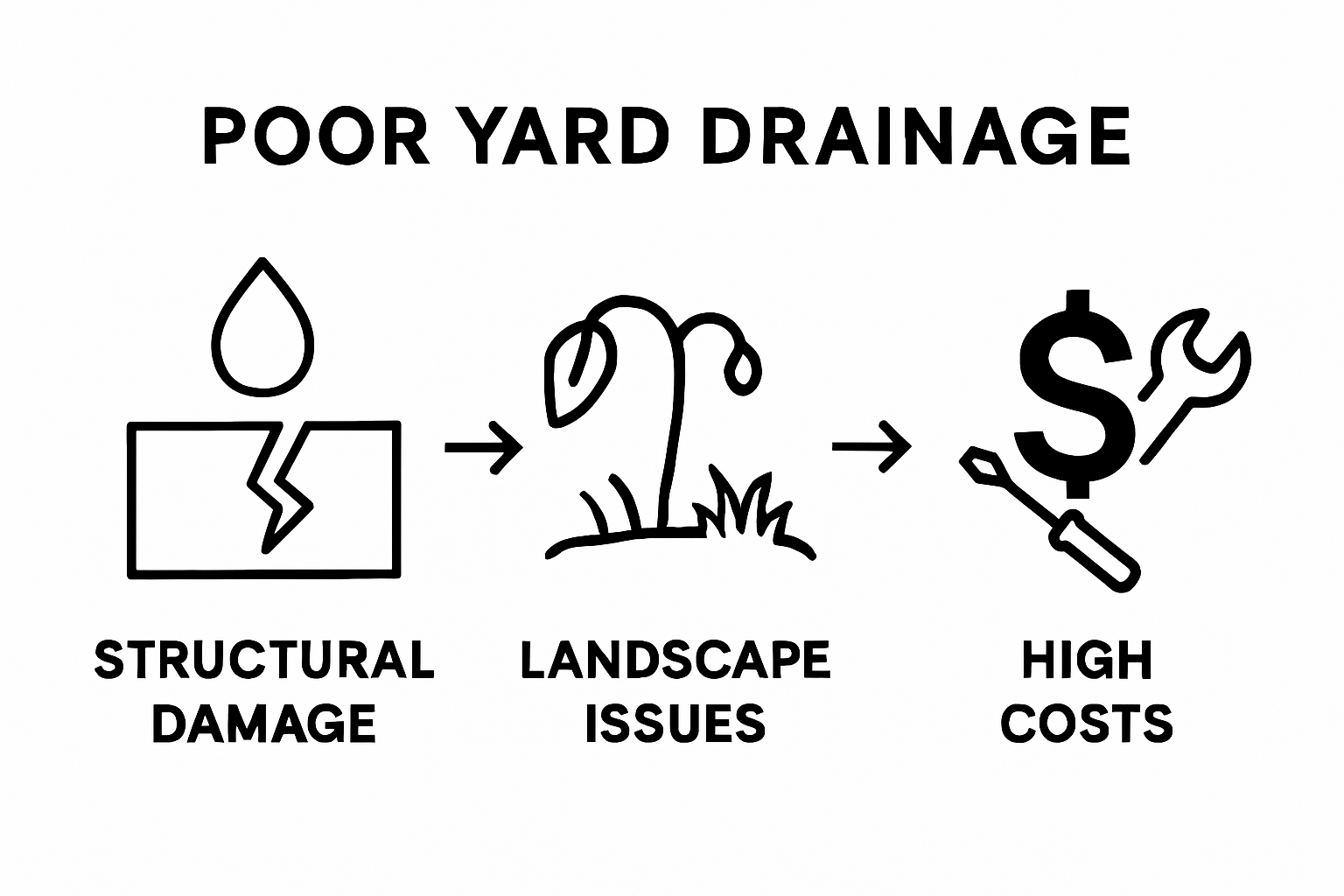
Proactive drainage management represents a strategic investment in property preservation, potentially saving significant repair expenses and maintaining property market value.
How Yard Drainage Solutions Function
Yard drainage solutions are sophisticated systems designed to manage water movement, protect property infrastructure, and maintain landscape health. These engineered approaches work by understanding and redirecting water flow through strategic landscape interventions.
Gravitational Water Management Principles
The fundamental mechanism of yard drainage relies on gravitational principles and topographical understanding. Water naturally flows from high-elevation points to lower areas, and effective drainage solutions manipulate this natural movement to prevent water accumulation. Properly designed drainage systems create controlled pathways that guide water away from vulnerable structural zones.
Grading and slope configuration play critical roles in drainage effectiveness.
Landscape professionals carefully adjust ground levels to create gentle slopes that encourage water movement away from buildings. By establishing a slight gradient, typically a minimum of two percent slope, water can be systematically redirected to designated collection or absorption zones.
Drainage System Mechanisms
Multiple drainage strategies work in concert to manage water flow:
- Subsurface perforated pipe networks
- Surface-level swales and channels
- Permeable ground cover materials
- Strategic landscape contouring
- Underground water collection systems
Research from the University of British Columbia demonstrates that integrated drainage approaches can reduce surface water retention by up to 85 percent, significantly mitigating potential property damage risks.
Technical Performance and Water Redirection
Advanced drainage solutions incorporate multiple technical components that work simultaneously. Catch basins collect surface runoff, underground pipes transport water to appropriate discharge locations, and strategically placed French drains facilitate groundwater movement. These systems do not simply move water but also filter sediments, manage water quality, and prevent soil erosion. By creating intelligent water management networks, drainage solutions transform potential landscape vulnerabilities into controlled, predictable water movement environments.
Key Concepts in Yard Drainage Systems
Understanding yard drainage systems requires knowledge of complex environmental and engineering principles that go beyond simple water movement. These systems represent sophisticated approaches to landscape water management, integrating multiple scientific disciplines to protect property and maintain ecological balance.
Hydrological Interaction and Soil Dynamics
Soil composition plays a critical role in determining drainage effectiveness. Different soil types interact with water uniquely, creating complex absorption and redirection scenarios. Clay soils, prevalent in Calgary regions, have minimal permeability, requiring more advanced drainage interventions. Sandy soils, conversely, offer higher water absorption rates but can create their own challenges with rapid drainage and potential nutrient leaching.
The interaction between soil, water, and landscape topography creates a dynamic ecosystem. Water does not simply flow across surfaces but interacts with multiple environmental layers, including underground mineral compositions, organic matter, and existing landscape structures. Understanding these interactions helps professionals design more nuanced and effective drainage solutions.
Drainage System Design Components
Successful yard drainage systems incorporate multiple technical elements working in synchronized harmony:
- Perforated drainage pipes
- Gravity-based water redirection mechanisms
- Permeable landscape materials
- Strategic grading techniques
- Water filtration and sediment management systems
Research from the Alberta Geological Survey highlights that comprehensive drainage design must account for regional geological characteristics, precipitation patterns, and specific property landscape configurations.
Performance Metrics and Environmental Considerations
Modern yard drainage solutions transcend simple water movement. They represent holistic environmental management strategies that balance water redirection with ecosystem preservation. Effective drainage systems not only protect property infrastructure but also contribute to groundwater recharge, soil health, and broader environmental sustainability.
Advanced drainage approaches consider water quality, sediment management, potential contamination risks, and long-term landscape health. By integrating scientific understanding with practical engineering, these systems transform potential water-related challenges into opportunities for intelligent landscape management.
Real-World Applications of Yard Drainage Solutions
Yard drainage solutions extend far beyond theoretical concepts, representing critical interventions that protect properties, enhance landscape functionality, and mitigate environmental risks. These practical applications demonstrate how sophisticated water management strategies transform potential challenges into sustainable landscape designs.
Residential Property Drainage Strategies
Residential yard drainage solutions are tailored to address specific property challenges, accounting for unique topographical and geological conditions. Homeowners encounter diverse drainage scenarios requiring nuanced approaches. Steep properties might require terraced drainage systems with strategic retaining walls, while flat landscapes demand more complex underground pipe networks and strategic grading techniques.
In Calgary’s variable climate, residential drainage solutions must accommodate rapid snowmelt, intense summer rainstorms, and seasonal ground moisture fluctuations. Innovative techniques like French drains, underground perforated pipe systems, and strategically placed catch basins help homeowners manage water movement effectively, protecting foundation integrity and landscape aesthetics.
Commercial and Institutional Drainage Applications
Commercial properties present more complex drainage challenges requiring comprehensive engineering approaches:
- Large impermeable surface areas
- Higher water volume management requirements
- Stringent environmental compliance standards
- Complex landscape configurations
- Multifaceted water redirection needs
Research from the University of Calgary’s Civil Engineering Department indicates that commercial drainage solutions can reduce water-related infrastructure damage by up to 60 percent when professionally designed and implemented.
Ecological and Sustainable Drainage Innovations
Modern drainage solutions transcend traditional water management, incorporating ecological preservation and sustainable design principles. Innovative approaches like bioswales, rain gardens, and permeable pavements demonstrate how drainage systems can simultaneously manage water flow and contribute to environmental health.
These advanced systems do more than redirect water they create multifunctional landscapes that filter pollutants, support local biodiversity, reduce urban heat island effects, and enhance overall environmental resilience. By integrating drainage solutions with ecological design, property owners can transform potential water management challenges into opportunities for sustainable landscape development.
Protect Your Property from Costly Water Damage—The Ace Landscapes Solution
Worried about standing water, soggy lawns, or cracks forming along your foundation? Your concerns are real. As discussed in the article, poor yard drainage can quickly threaten both your home’s structure and the health of your landscaping. Water buildup does more than impact curb appeal. It invites serious risks like foundation movement, soil erosion, and unhealthy landscapes. Many Calgary properties struggle with clay-heavy soils and irregular terrain—making specialized yard drainage solutions essential.
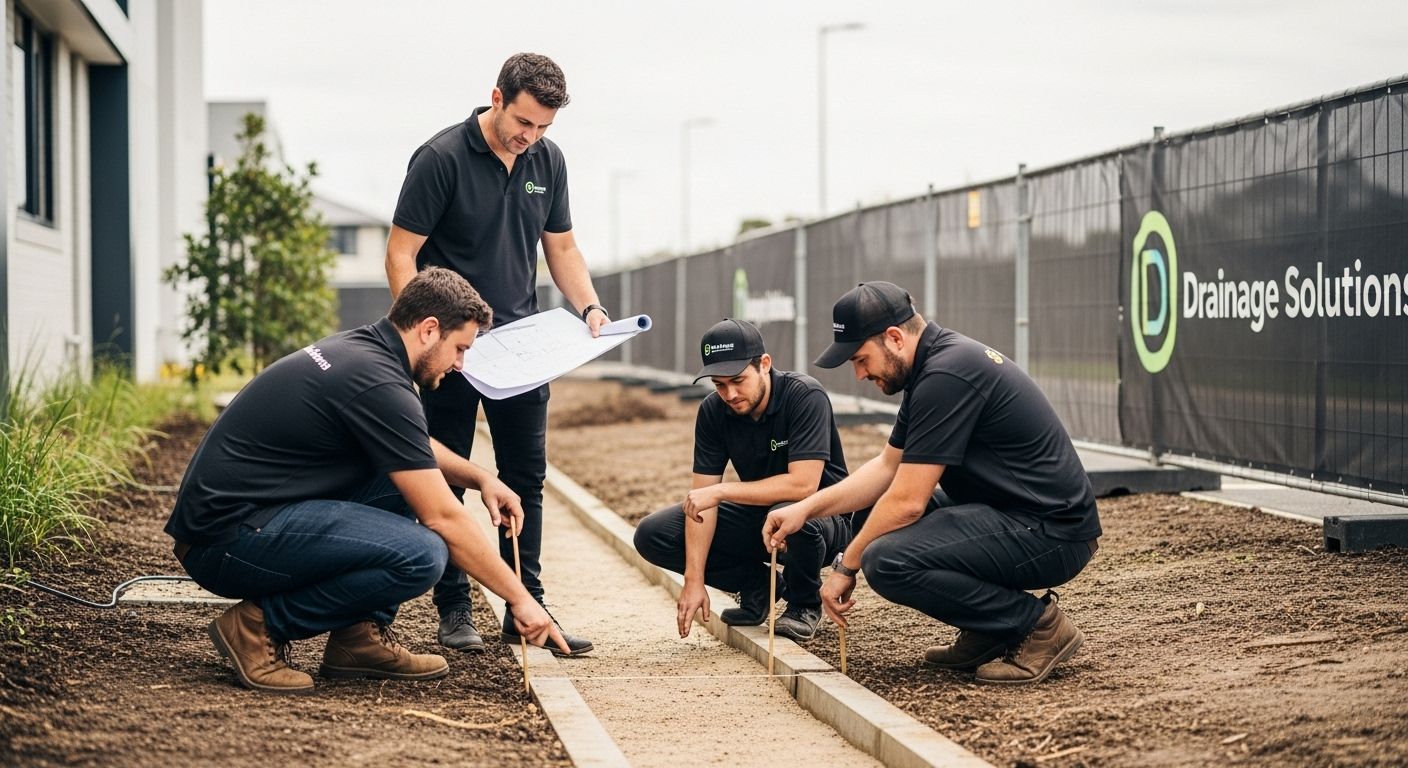
Let Ace Landscapes elevate your property before the next Calgary storm hits. Our expert team creates custom drainage systems that move water away from your foundation and restore landscape health. Whether you need grading, French drains, or integrated landscape redesign, we do it all with proven science and local experience. Ready to say goodbye to water worries? Visit Ace Landscapes to learn more and book your consultation now. Don’t wait for damage to get worse. Let us protect your investment today.
Frequently Asked Questions
What are the common yard drainage solutions for properties?
Common yard drainage solutions include subsurface perforated pipe networks, surface-level swales and channels, permeable ground cover materials, French drains, and strategic landscape contouring to redirect water effectively.
To clarify the various yard drainage solutions discussed in the article, the table below summarizes key features and purposes of different drainage system types.
| Drainage Solution Type | Key Features | Main Purpose |
|---|---|---|
| French Drains | Perforated pipes below ground, gravel-filled trench | Redirect groundwater and surface runoff away from area |
| Surface Swales & Channels | Shallow, sloped trenches or depressions | Divert surface water along a controlled path |
| Permeable Ground Cover Materials | Porous pavers, gravel, or amended soils | Allow water to filter through surface, reducing runoff |
| Subsurface Pipe Networks | Underground system of perforated pipes | Manage and carry larger volumes of water underground |
| Catch Basins | Surface grates with below-ground basins | Collect and direct surface runoff into pipe systems |
| Bioswales/Rain Gardens | Shallow vegetated basins with engineered soils | Filter, slow, and absorb runoff while supporting biodiversity |
How does poor yard drainage affect my property?
Poor yard drainage can lead to significant issues such as foundation structural damage, landscape degradation, basement flooding, mold growth, and creating stagnant water areas that can become mosquito breeding grounds.
What factors should I consider when planning a yard drainage system?
When planning a yard drainage system, consider your property’s topography, soil composition, moisture levels, and local climate conditions, as these factors significantly impact water movement and drainage effectiveness.
How can I prevent water pooling in my yard?
To prevent water pooling in your yard, implement proper grading to create slopes that direct water away from your home, install effective drainage systems such as French drains, and utilize soil amendments to improve drainage in clay-heavy areas.