
Understanding Flood Control Landscaping for Effective Spaces
September 2, 2025
7 Essential Tips for Pet Friendly Landscaping
September 4, 2025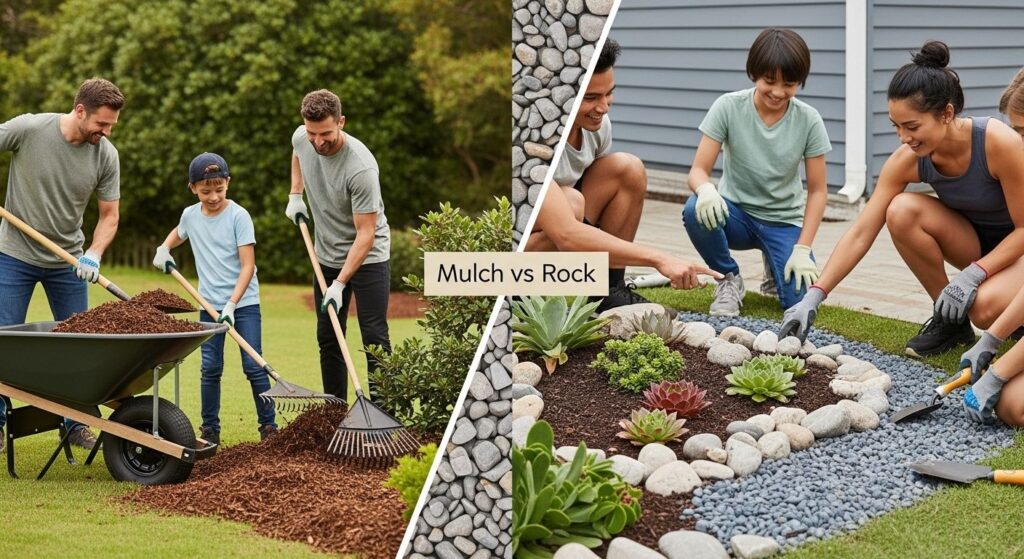
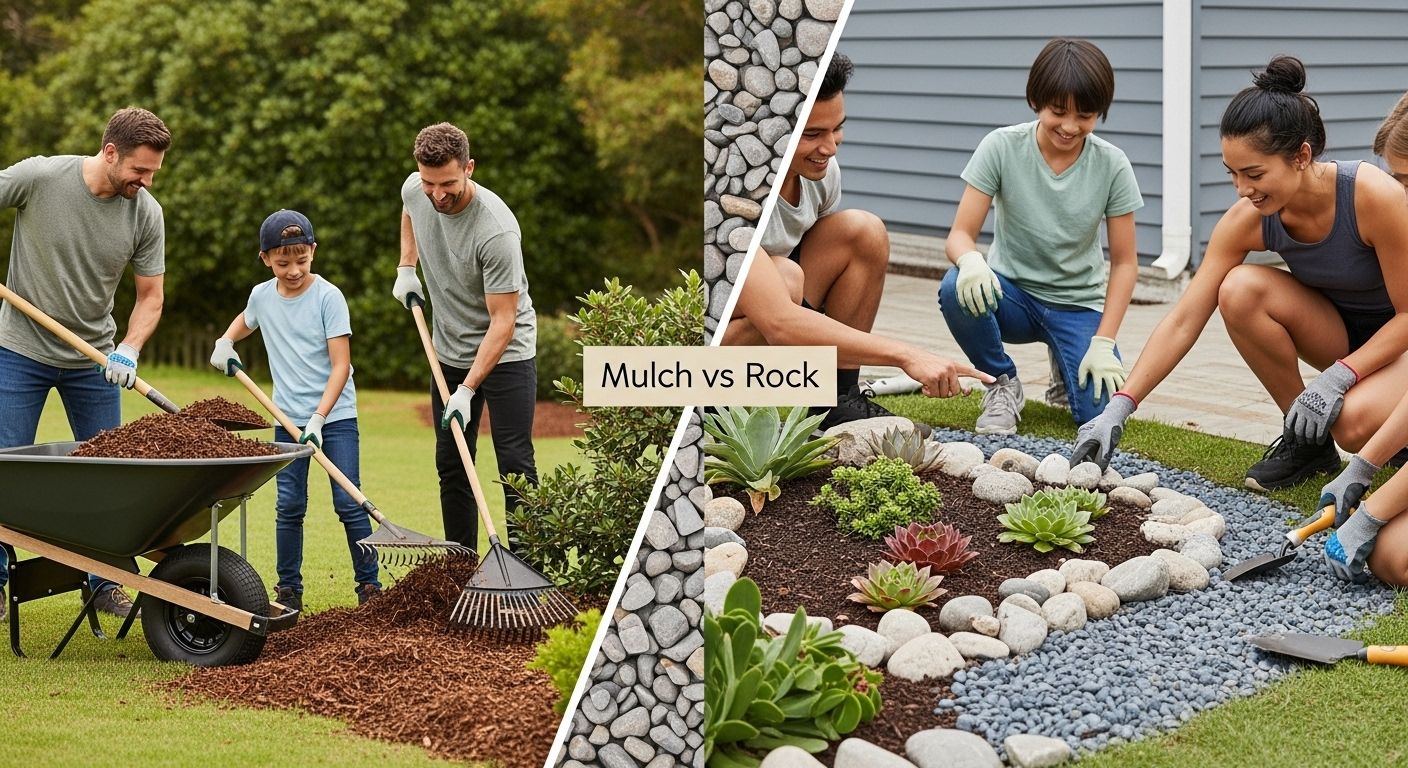
Mulch and rock landscaping can completely change how any yard looks and functions. Most people picture mulch as soft, crumbly wood chips and rock as hard, permanent stones. Yet these two options do a lot more than sit on the ground. Organic mulch can improve soil health and cut weed growth by up to 50 percent, while rock can last for decades with hardly any upkeep. You might think it’s all about picking what looks best, but the real differences show up in your water bill, your plant growth, and even the wildlife you see in your yard.
Table of Contents
- Defining Mulch And Rock Landscaping: What Are They?
- The Importance Of Choosing The Right Material: Why It Matters?
- How Mulch And Rock Work In Landscaping: Their Functions Explained
- Comparing Aesthetics And Maintenance Needs: Key Considerations
- Real-World Applications: Choosing The Best Option For Your Property
Quick Summary
| Takeaway | Explanation |
|---|---|
| Choose mulch for soil health benefits | Organic mulches enrich soil, retain moisture, and support plant growth through nutrient cycling. |
| Select rock for low-maintenance aesthetics | Rock landscaping offers durable, visually appealing surfaces that require little upkeep over time. |
| Consider environmental factors with materials | Evaluate microclimates, slope, and water availability to make informed material choices for landscaping. |
| Aesthetic appeal depends on material type | Organic mulches provide warm, natural visuals, while rocks create structured, geometric designs. |
| Long-term costs vary by material | Mulches need periodic replacement, while rock landscaping has higher initial costs but lower long-term maintenance expenses. |
Defining Mulch and Rock Landscaping: What Are They?
Mulch and rock landscaping represent two fundamental approaches to ground covering and design in outdoor spaces, each offering unique aesthetic and functional properties. These materials transform gardens, pathways, and property exteriors by providing essential protective and decorative elements.
Understanding Mulch Landscaping
Mulch is an organic or inorganic material spread over soil surfaces to provide multiple benefits. Organic mulches typically include wood chips, bark fragments, straw, compost, and leaf matter. These materials decompose naturally, enriching soil nutrients and improving overall ground quality. According to University of Florida IFAS Extension, organic mulches offer several critical advantages:
- Moisture retention for plant roots
- Temperature regulation of soil environments
- Weed suppression and prevention
- Gradual soil nutrient enhancement
Rock Landscaping Fundamentals
Rock landscaping involves using stones, gravel, and mineral-based materials as ground coverings or decorative elements. Unlike organic mulches, rocks provide a more permanent, low-maintenance solution for outdoor spaces. Rock landscaping materials can include:
- River rocks
- Crushed granite
- Volcanic stones
- Decorative pebbles
- Slate fragments
Rock landscaping is particularly valuable in regions with water conservation challenges, offering excellent drainage, minimal maintenance requirements, and long-lasting aesthetic appeal. These materials create visually striking ground surfaces that resist erosion and maintain consistent appearance over extended periods.
The choice between mulch and rock landscaping depends on specific environmental conditions, design preferences, and functional requirements of your outdoor space. Both options provide unique benefits, transforming ordinary ground surfaces into intentional, attractive landscape elements.
Below is a side-by-side comparison of key features, benefits, and maintenance needs for mulch and rock landscaping to help clarify their differences at a glance.
| Feature / Characteristic | Mulch Landscaping | Rock Landscaping |
|---|---|---|
| Material Type | Organic or inorganic (e.g. wood chips, bark, compost) | Stones, gravel, decorative pebbles, slate |
| Lifespan | Needs periodic replenishment as it decomposes | Can last for decades with minimal upkeep |
| Soil Health | Improves soil nutrients and biodiversity | Minimal impact on soil health |
| Moisture Management | Retains soil moisture | Provides excellent drainage |
| Temperature Regulation | Buffers and cools soil temperature | Reflects solar radiation, can increase warmth |
| Weed Suppression | Suppresses weeds by blocking sunlight | Inhibits weeds but may require landscape fabric |
| Maintenance Required | Regular replenishment and attention | Low maintenance after initial installation |
| Initial Cost | Lower upfront cost | Higher initial investment |
| Aesthetic Qualities | Warm, natural, earthy visuals | Clean, structured, geometric appearance |
The Importance of Choosing the Right Material: Why It Matters?
Selecting the appropriate landscaping material goes far beyond aesthetic considerations. The right choice impacts environmental sustainability, plant health, maintenance requirements, and long-term property value. Homeowners and landscaping professionals must carefully evaluate multiple factors when determining whether mulch or rock will best serve their specific outdoor environments.
Environmental Impact and Sustainability
The selection between mulch and rock landscaping materials directly influences ecological sustainability and local ecosystem dynamics. According to Clemson University’s Home & Garden Information Center, different materials interact uniquely with surrounding environments, creating distinct microclimates and ecological conditions.
- Organic mulches support soil biodiversity
- Rock landscapes minimize water consumption
- Material selection influences local wildlife habitats
- Drainage patterns are significantly affected by ground covering choices
Long-Term Cost and Maintenance Considerations
Each landscaping material presents unique financial implications and maintenance demands. Rock landscaping requires significant upfront investment but offers minimal ongoing maintenance. Organic mulches demand periodic replacement but provide continuous soil enrichment. Property owners must evaluate:
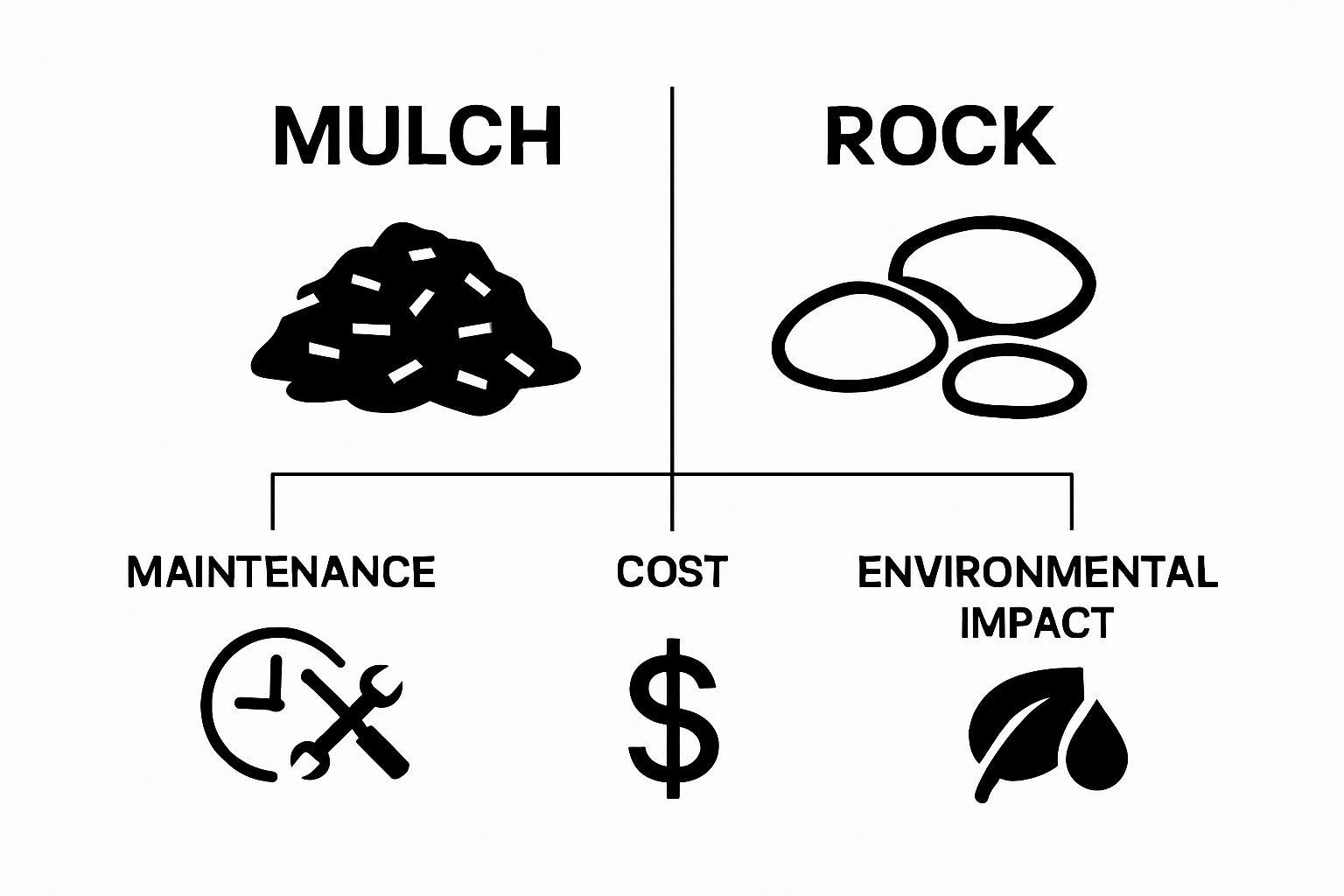
- Initial installation expenses
- Annual replacement or replenishment costs
- Time investment for ground covering maintenance
- Potential soil health improvements
Proper material selection transcends simple aesthetic preferences. It represents a strategic decision affecting property appearance, environmental health, and long-term landscape sustainability. Understanding the nuanced characteristics of mulch and rock landscaping empowers property owners to make informed choices that balance visual appeal with practical functionality.
This table summarizes how mulch and rock differ in their environmental impact and long-term maintenance, allowing for a straightforward sustainability and cost comparison.
| Aspect | Mulch | Rock |
|---|---|---|
| Sustainability | Organic mulches enhance biodiversity | Minimizes water usage and erosion |
| Wildlife Support | Supports soil microorganisms and insects | Habitat disruption, fewer interactions |
| Water Conservation | Retains moisture for plants | Excellent drainage, minimal water use |
| Soil Nutrient Contribution | Gradually releases nutrients | Does not contribute nutrients |
| Annual Maintenance | Needs periodic top-up | Minimal, mostly weed monitoring |
| Upfront Investment | Lower initial expense | Higher initial cost, less future expense |
| Replacement Frequency | Every 1-3 years depending on type | Rarely, if at all |
Ultimately, the right landscaping material transforms outdoor spaces from mere ground coverings into dynamic, purposeful environments that reflect thoughtful design and environmental consciousness.
How Mulch and Rock Work in Landscaping: Their Functions Explained
Landscaping materials like mulch and rock serve far more complex roles than simple ground covering. They act as dynamic environmental systems that interact with soil, plants, and surrounding ecosystems in sophisticated ways. Understanding their functional mechanisms helps property owners make informed landscaping decisions.
Moisture Management and Temperature Regulation
Both mulch and rock materials play critical roles in managing soil moisture and temperature. According to Clemson Cooperative Extension, these materials create protective barriers that significantly influence ground conditions. Organic mulches absorb and retain moisture, while rock landscapes provide superior heat reflection and drainage.
- Rock materials reflect solar radiation
- Organic mulches retain soil moisture
- Temperature buffering protects plant root systems
- Water conservation occurs through different mechanisms
Soil Health and Ecosystem Interactions
The choice between mulch and rock dramatically impacts soil health and local ecological systems. Organic mulches decompose gradually, introducing nutrients and supporting microbial life. Rock landscapes create stable ground environments with minimal biological interference. Learn more about strategic landscape design choices.
Rock materials offer exceptional durability and minimal maintenance, creating consistent ground surfaces that resist erosion and weathering. Organic mulches, conversely, provide dynamic soil enrichment, supporting plant growth through continuous nutrient cycling.
Ultimately, landscaping materials are not merely decorative elements but complex environmental interventions. Thoughtful selection transforms outdoor spaces into responsive, adaptive ecosystems that balance aesthetic appeal with ecological functionality.
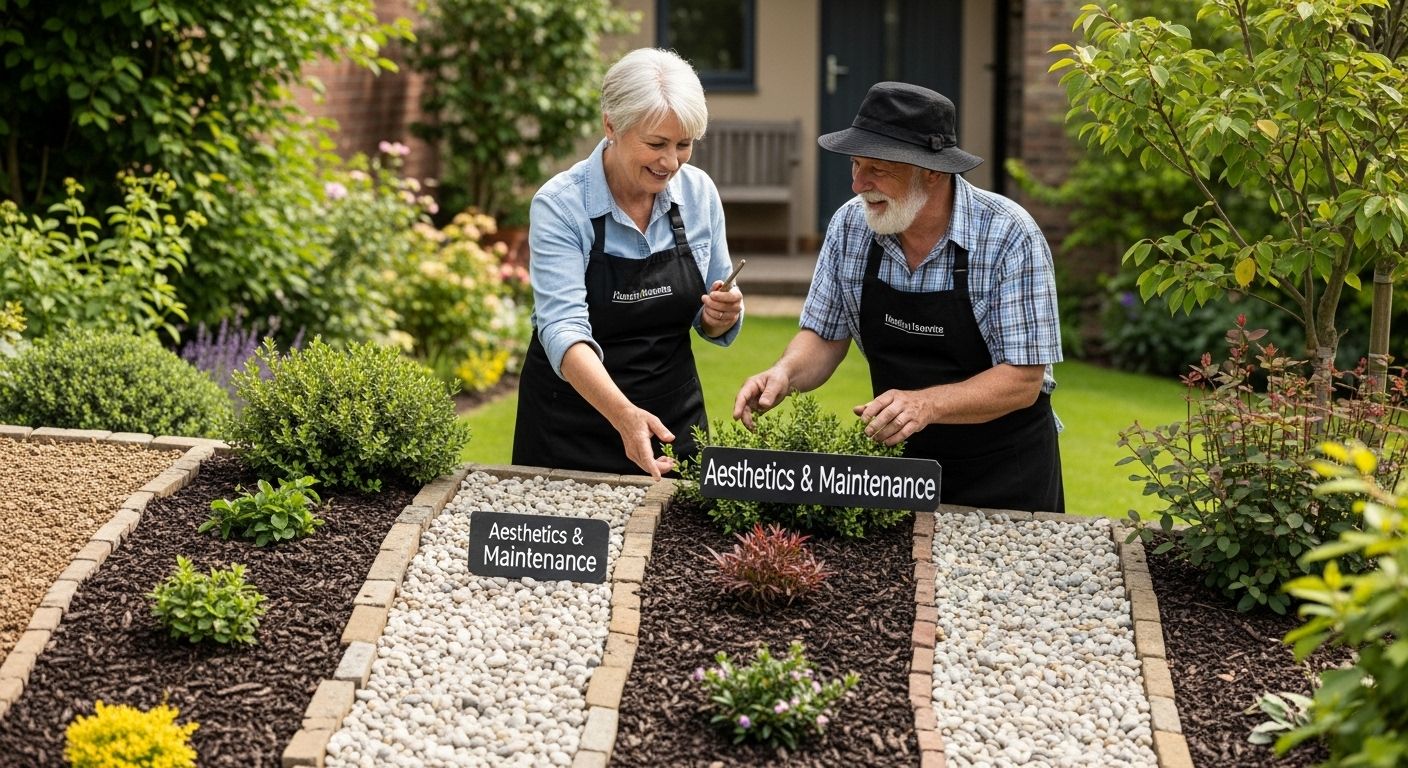
Comparing Aesthetics and Maintenance Needs: Key Considerations
Landscaping material selection involves balancing visual appeal, functional requirements, and long-term maintenance challenges. Property owners must thoughtfully evaluate how different ground coverings impact aesthetic design, ongoing upkeep, and overall landscape performance.
Visual Impact and Aesthetic Diversity
According to the U.S. Environmental Protection Agency, landscaping materials offer distinct visual characteristics that transform outdoor spaces. Organic mulches provide soft, natural textures and earthy color variations, while rock landscapes create structured, geometric environments with consistent visual patterns.
- Organic mulches create warm, natural visual compositions
- Rock materials offer clean, architectural design elements
- Color variations influence overall landscape perception
- Texture diversity impacts aesthetic complexity
Maintenance Requirements and Long-Term Performance
Each landscaping material presents unique maintenance demands and performance characteristics. Rock landscapes require minimal annual replacement but can create challenging weed management scenarios. Organic mulches demand periodic replenishment but support ongoing soil health. Learn more about comprehensive property maintenance strategies.
Rock materials excel in durability and provide consistent ground coverage, resisting erosion and weathering. However, they can potentially increase ground temperatures and create less hospitable environments for plant growth. Organic mulches, conversely, continuously enrich soil conditions and support more dynamic ecological interactions.
Ultimately, selecting between mulch and rock landscaping transcends simple aesthetic preferences. Successful landscape design requires understanding how materials interact with local environmental conditions, maintenance capabilities, and long-term property objectives.
Real-World Applications: Choosing the Best Option for Your Property
Selecting the right landscaping material involves carefully analyzing specific property characteristics, environmental conditions, and intended aesthetic outcomes. Property owners must consider multiple factors to determine whether mulch or rock will best serve their unique landscape requirements.
Site-Specific Landscape Considerations
According to the California Department of Transportation, landscape material selection depends on critical environmental parameters. Different terrains and microclimates demand tailored approaches to ground covering strategies.
- Slope grade influences material stability
- Sun exposure affects ground temperature
- Water availability determines material performance
- Plant species compatibility requires strategic selection
Practical Performance and Functional Requirements
Each landscape scenario presents unique challenges that demand nuanced material selection. Steep slopes might benefit from organic mulches that reduce erosion, while xeriscaped areas could favour rock landscapes for water conservation. Explore comprehensive landscaping investment strategies to make informed decisions.
Rock materials excel in areas requiring minimal maintenance and consistent ground coverage. Organic mulches provide superior soil health and support more dynamic ecological interactions. Professional landscapers recommend evaluating specific property needs, including drainage patterns, plant requirements, and long-term aesthetic goals.
Successful landscape design transcends simple material selection. It represents a holistic approach to creating functional, beautiful outdoor spaces that harmonize with local environmental conditions and property-specific requirements.
Transform Your Yard with the Right Landscaping Material
Are you struggling to decide between mulch and rock for your property? Choosing the right ground covering affects more than just looks. As discussed in this article, your decision can impact moisture control, soil health, maintenance time, and even your property’s value. Many homeowners and business owners feel uncertainty about which material will deliver the best results based on their unique landscapes. You do not have to make this decision alone.
Let Ace Landscapes guide you toward a solution tailored to your site and your goals. Our Calgary team listens to your needs and applies proven expertise to every project, whether you want to retain soil moisture with organic mulch or improve drainage with decorative rock. Visit Ace Landscapes for a glimpse of successful transformations or explore our property maintenance guide to understand how thoughtful material choices benefit your landscape all year round. Act now to secure a beautiful outdoor space that meets your needs and adds lasting value. Contact us today to discuss your personalized plan.
Frequently Asked Questions
What are the benefits of using mulch in landscaping?
Mulch provides several benefits, including moisture retention for plant roots, temperature regulation of soil, weed suppression, and the gradual enhancement of soil nutrients as it decomposes over time.
How does rock landscaping differ from mulch in terms of maintenance?
Rock landscaping typically requires minimal ongoing maintenance due to its durability and resistance to erosion, while organic mulches need periodic replacement to maintain their benefits and aesthetic appeal.
What factors should be considered when choosing between mulch and rock landscaping?
When deciding between mulch and rock, consider environmental factors such as slope grade, sun exposure, water availability, and the compatibility with desired plant species to ensure the best performance in your landscape.
Can rock landscaping help with water conservation?
Yes, rock landscaping is particularly valuable in areas facing water conservation challenges as it provides excellent drainage and minimizes water usage compared to traditional organic mulches.