
What Is Landscape Design? Expert Guide for Calgary Properties
August 12, 2025
Best Front Yard Makeover Ideas for Calgary Properties
August 14, 2025
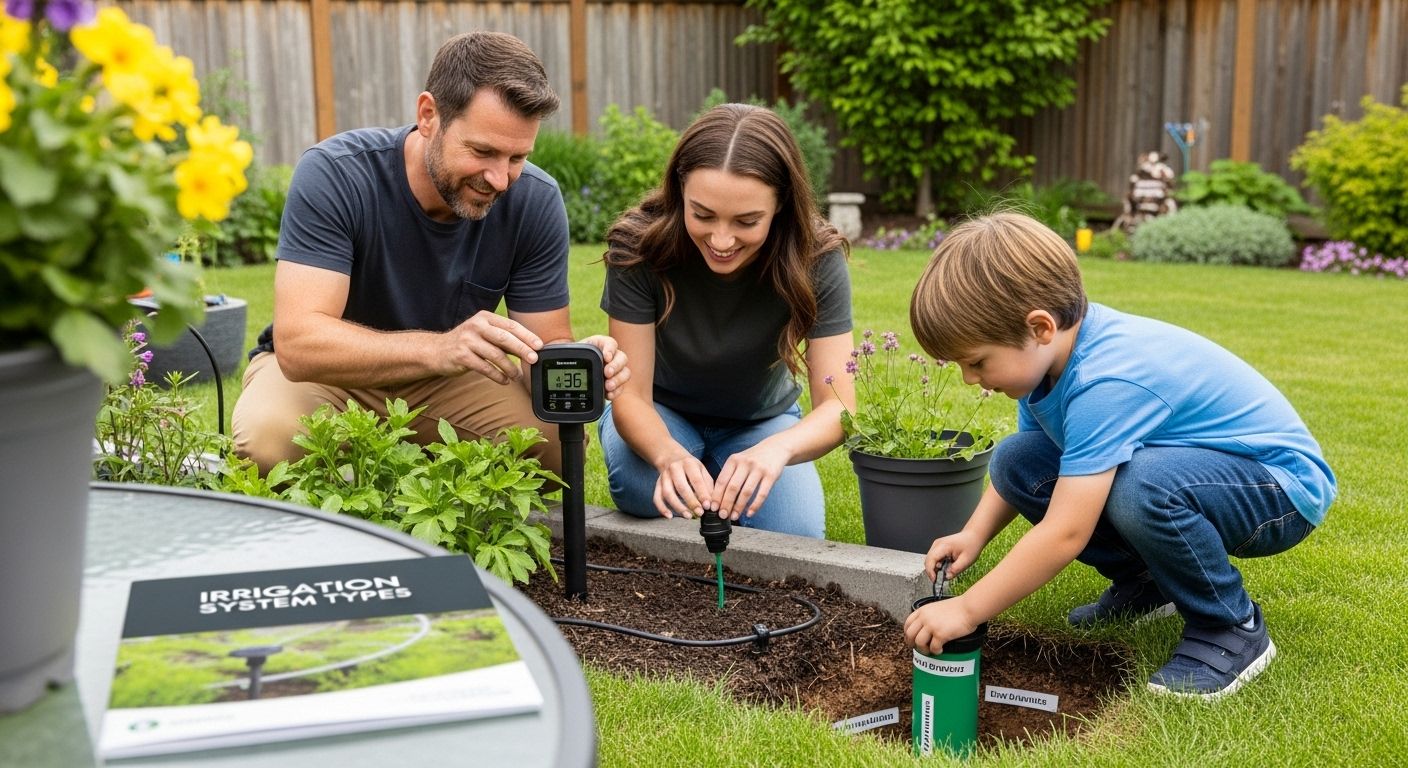
Choosing the right irrigation system can make or break your Calgary lawn. Some systems sound high-tech but end up wasting loads of water. Drip irrigation can actually cut water use by up to 50 percent compared to regular sprinklers. You might think that means drip is always best, but certain Calgary soils and property types do even better with a hybrid approach.
Table of Contents
- Understanding The Main Irrigation System Types
- Comparing Sprinkler, Drip, And Surface Methods
- Choosing The Right System For Calgary Properties
- Maintenance Tips For Calgarian Irrigation Systems
Quick Summary
| Takeaway | Explanation |
|---|---|
| Evaluate irrigation system types carefully | Assess sprinkler, drip, and subsurface systems based on property needs and landscape types. |
| Consider water efficiency | Drip irrigation can reduce water consumption by up to 50% compared to sprinklers. |
| Regular maintenance is essential | Conduct seasonal checks to ensure optimal performance and prevent system failures. |
| Account for climate impacts | Calgary’s semi-arid climate demands efficient irrigation methods to manage water resources. |
| Consult professionals for assessments | Professional evaluations can help identify the best irrigation solutions tailored to unique properties. |
Understanding the Main Irrigation System Types
Irrigation systems are critical for maintaining healthy landscapes in Calgary’s varied climate, where water management can make the difference between thriving and struggling vegetation. Property owners have multiple irrigation system types to choose from, each with unique characteristics designed to meet specific landscaping needs.
Sprinkler Irrigation Systems
Sprinkler systems represent the most common irrigation approach for residential and commercial properties in Calgary. These systems distribute water through overhead sprinkler heads that spray water in circular or rectangular patterns across lawns and gardens. According to the California Department of Water Resources, sprinkler systems offer versatility for different terrain types and can cover large areas efficiently.
Modern sprinkler systems come in several subtypes. Fixed spray sprinklers provide consistent water distribution for smaller, uniform areas. Rotary sprinklers work best for larger landscapes, rotating slowly to ensure comprehensive water coverage. Rotating heads can reach distances of 15 to 50 feet, making them ideal for expansive properties.
Drip Irrigation Systems
Drip irrigation represents a precision-focused approach to water delivery. These systems use a network of tubes with small emitters that release water directly to plant roots, minimizing water waste and evaporation. Water efficiency is the primary advantage of drip irrigation, with research indicating these systems can reduce water consumption by up to 50% compared to traditional sprinkler methods.
For Calgary properties with garden beds, flower gardens, or specialized landscaping, drip systems offer targeted hydration. They work exceptionally well in areas with water restrictions or for property owners seeking sustainable irrigation solutions. The slow, consistent water delivery helps prevent soil erosion and ensures plants receive moisture at their root zones.
Subsurface Irrigation Systems
Subsurface irrigation represents an advanced water management technique where irrigation pipes are installed underground, delivering water directly to root systems. This method minimizes surface water loss and provides consistent moisture without disrupting landscape aesthetics. Irrigation experts recommend these systems for properties with challenging terrain or specific landscaping requirements.
The underground placement offers several benefits. Water reaches plant roots more efficiently, reducing evaporation and preventing water contact with leaf surfaces that could potentially cause fungal issues. These systems work particularly well in areas with high temperatures or locations experiencing water conservation mandates.
Choosing the right irrigation system depends on multiple factors including property size, vegetation types, local climate conditions, and water conservation goals. Calgary property owners should consider professional assessment to determine the most suitable irrigation approach for their specific landscape needs.
To help compare the primary irrigation system options available for Calgary properties, the following table summarizes their main features, benefits, and ideal applications.
| System Type | Key Features | Water Efficiency | Best For |
|---|---|---|---|
| Sprinkler | Overhead spray heads, covers large areas | 75-85% | Lawns, uniform landscapes |
| Drip | Tubes with emitters, delivers water to roots | Up to 90%, can save 50% | Garden beds, mixed plantings, water-restricted areas |
| Subsurface | Underground pipes, direct to root zone | High | Areas with challenging terrain, clay soils |
| Surface | Flood, furrow methods, basic water spread | 50-60% or lower | Large, flat agricultural plots |
Comparing Sprinkler, Drip, and Surface Methods
Selecting the optimal irrigation method requires a comprehensive understanding of each system’s strengths, limitations, and suitability for specific landscape conditions. Calgary property owners must carefully evaluate water efficiency, installation costs, maintenance requirements, and environmental impact when choosing between sprinkler, drip, and surface irrigation techniques.
Water Efficiency and Distribution Dynamics
Each irrigation method delivers water differently, impacting plant health and resource consumption. The University of California Agriculture and Natural Resources notes that water distribution efficiency varies significantly across irrigation techniques. Sprinkler systems typically achieve 75-85% water distribution efficiency, while drip irrigation can reach up to 90% efficiency by minimizing evaporation and targeting root zones directly.
Surface irrigation methods, which include flood and furrow techniques, demonstrate the lowest efficiency rates, often losing 40-50% of water through runoff and evaporation. These traditional methods work best in agricultural settings with large, flat terrains but prove less effective for residential and commercial landscaping in Calgary’s diverse terrain.
Installation and Maintenance Considerations
Initial investment and long-term maintenance represent critical factors in irrigation system selection. Sprinkler systems offer moderate installation complexity and moderate maintenance requirements. Components like sprinkler heads, valves, and controllers need periodic inspection and potential replacement. According to irrigation system experts, professional installation can range from CAD 2,500 to CAD 7,500 depending on property size and system complexity.
Drip irrigation systems require more precise installation but offer lower long-term maintenance needs. The intricate network of tubing and emitters demands careful design but reduces water waste and potential system failures. Underground components are less susceptible to damage from lawn maintenance activities, providing a more durable solution for detailed landscaping.
Environmental and Landscape Adaptability
Environmental conditions in Calgary significantly influence irrigation method effectiveness. Landscape diversity plays a crucial role in determining the most suitable approach. Drip irrigation excels in areas with diverse plant types, allowing precise water delivery to individual plants with varying moisture requirements. This method works exceptionally well in garden beds, vegetable plots, and landscapes with mixed vegetation.
Sprinkler systems provide broader coverage and work best for uniform landscapes like lawns and large grass areas. They accommodate slight terrain variations and can be adjusted to cover irregular property shapes. Surface irrigation methods become less practical in regions with variable terrain, limited water resources, and complex landscaping designs.
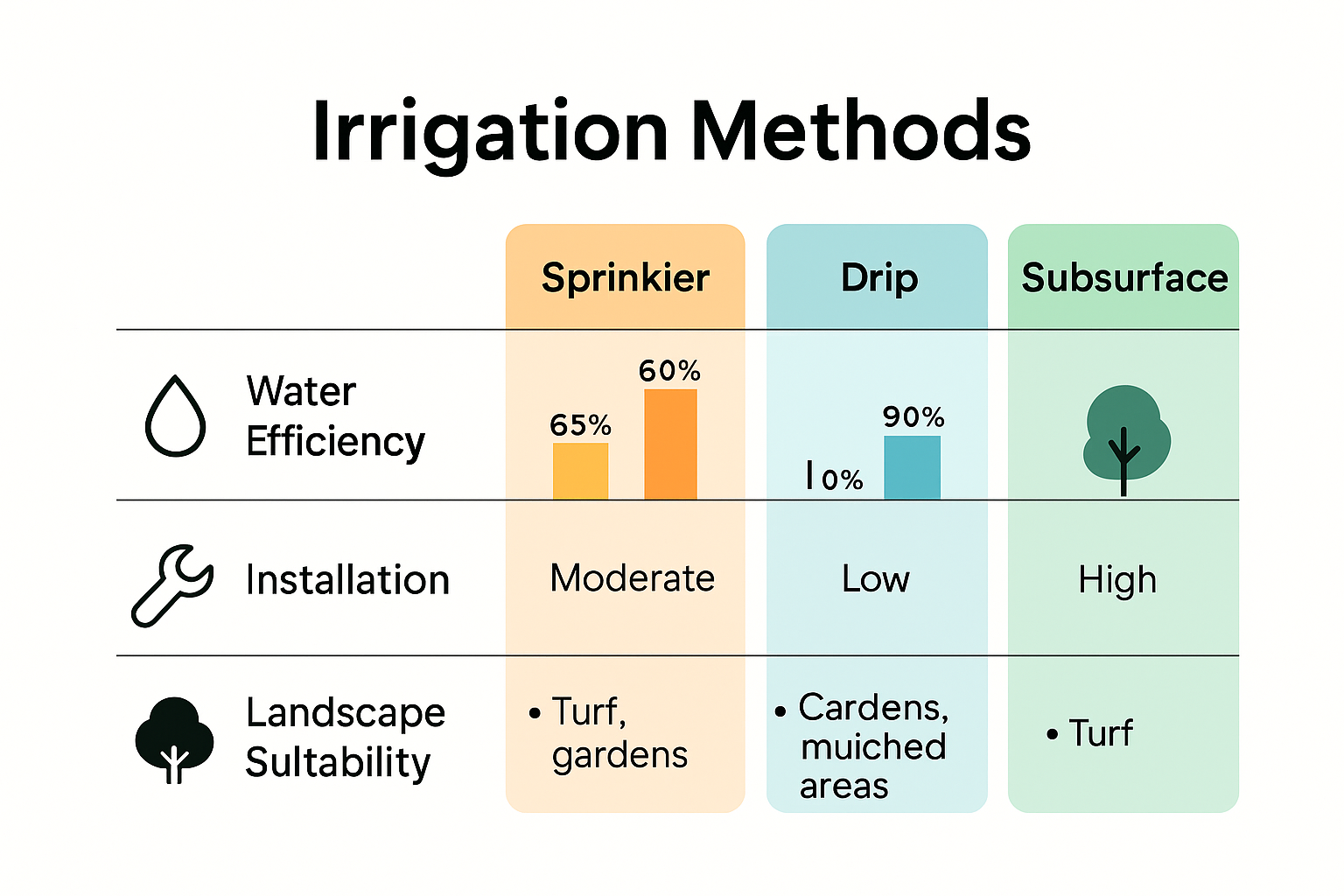
The choice between sprinkler, drip, and surface irrigation methods depends on multiple interconnected factors. Property owners must consider water conservation goals, landscape characteristics, budget constraints, and long-term maintenance expectations. Professional landscaping consultation can help determine the most appropriate irrigation strategy for specific Calgary properties, ensuring optimal plant health and resource management.
Choosing the Right System for Calgary Properties
Selecting an appropriate irrigation system for Calgary properties demands careful consideration of unique local environmental factors, landscape characteristics, and water management goals. Property owners must navigate multiple variables to design an efficient and sustainable water delivery strategy that supports healthy vegetation while minimizing resource consumption.
Climate and Soil Considerations
Calgary’s distinctive climate presents specific challenges for irrigation system selection. Environment Canada highlights the region’s semi-arid conditions, characterized by relatively low precipitation and significant temperature variations. These environmental conditions require irrigation systems capable of providing consistent moisture while adapting to rapid weather changes.
Soil composition plays a critical role in irrigation system performance. Calgary properties often feature clay-heavy soils with limited drainage capabilities, necessitating irrigation approaches that prevent water pooling and promote efficient moisture absorption. Soil water retention becomes a key factor in determining the most suitable irrigation method. Drip and subsurface systems excel in such environments by delivering water directly to root zones and minimizing surface runoff.
Property-Specific Landscape Analysis
Landscape complexity determines irrigation system effectiveness. Landscape Architecture Foundation recommends comprehensive property assessments that evaluate topography, vegetation types, sun exposure, and microclimatic conditions. Residential properties with diverse garden layouts might benefit from hybrid irrigation approaches combining multiple system types.
Large commercial properties require more sophisticated irrigation strategies. Zoned irrigation systems allow precise water management across different landscape sections, accommodating varying plant water requirements. For instance, xeriscaped areas with drought-resistant plants can utilize different irrigation techniques compared to traditional turf sections.
Water Conservation and Technological Integration
Modern irrigation systems offer advanced technological features that enhance water management efficiency. Smart irrigation controllers with weather-responsive sensors can automatically adjust watering schedules based on real-time environmental conditions. These systems monitor temperature, humidity, and precipitation, preventing unnecessary water usage during rainy periods or reducing output during cooler temperatures.
Water conservation represents a critical consideration for Calgary property owners. Municipal regulations and increasing environmental awareness drive the need for highly efficient irrigation solutions. Drip irrigation and precision sprinkler systems with moisture sensors can reduce water consumption by up to 40%, providing significant economic and environmental benefits.
Ultimately, selecting the right irrigation system requires professional expertise. Property owners should consult landscape professionals who understand Calgary’s unique environmental context. A comprehensive assessment considering soil conditions, landscape design, water conservation goals, and budgetary constraints will ensure the most effective irrigation strategy for individual properties.
Maintenance Tips for Calgarian Irrigation Systems
Proper maintenance of irrigation systems is crucial for Calgary property owners to ensure water efficiency, prevent costly repairs, and maintain landscape health. The region’s unique climate and seasonal variations demand a proactive approach to irrigation system care, addressing potential issues before they escalate into significant problems.
Seasonal System Preparation and Inspection
The University of Florida’s Gardening Solutions emphasizes the importance of regular system testing and repair. Calgary properties require specific attention to seasonal transitions, particularly the dramatic shifts between winter and summer conditions. Spring system startup involves a comprehensive inspection process that includes checking for winter damage, clearing debris, and verifying all components function correctly.
Property owners should conduct a thorough system evaluation in early spring. This includes inspecting underground pipes for frost heave damage, checking valve operations, and ensuring sprinkler heads are properly aligned. Utah State University Extension recommends cleaning controller cabinets, replacing batteries, and verifying all electrical connections to prevent potential system failures during the critical growing season.
Ongoing System Performance and Efficiency
Regular system calibration is essential for maintaining water efficiency in Calgary’s variable climate. Colorado State University Extension suggests conducting periodic checks to identify and correct potential issues. This includes examining sprinkler heads for misalignment, checking for leaks, and ensuring proper water distribution across the landscape.
Technological advancements offer property owners sophisticated maintenance tools. Smart irrigation controllers with diagnostic capabilities can provide real-time system performance data. These systems can detect irregular water flow, identify potential leaks, and alert property owners to maintenance requirements. Installing rain and frost sensors helps automatically adjust watering schedules, preventing unnecessary water usage during precipitation events or protecting the system during unexpected temperature drops.
Winterization and Long-Term System Protection
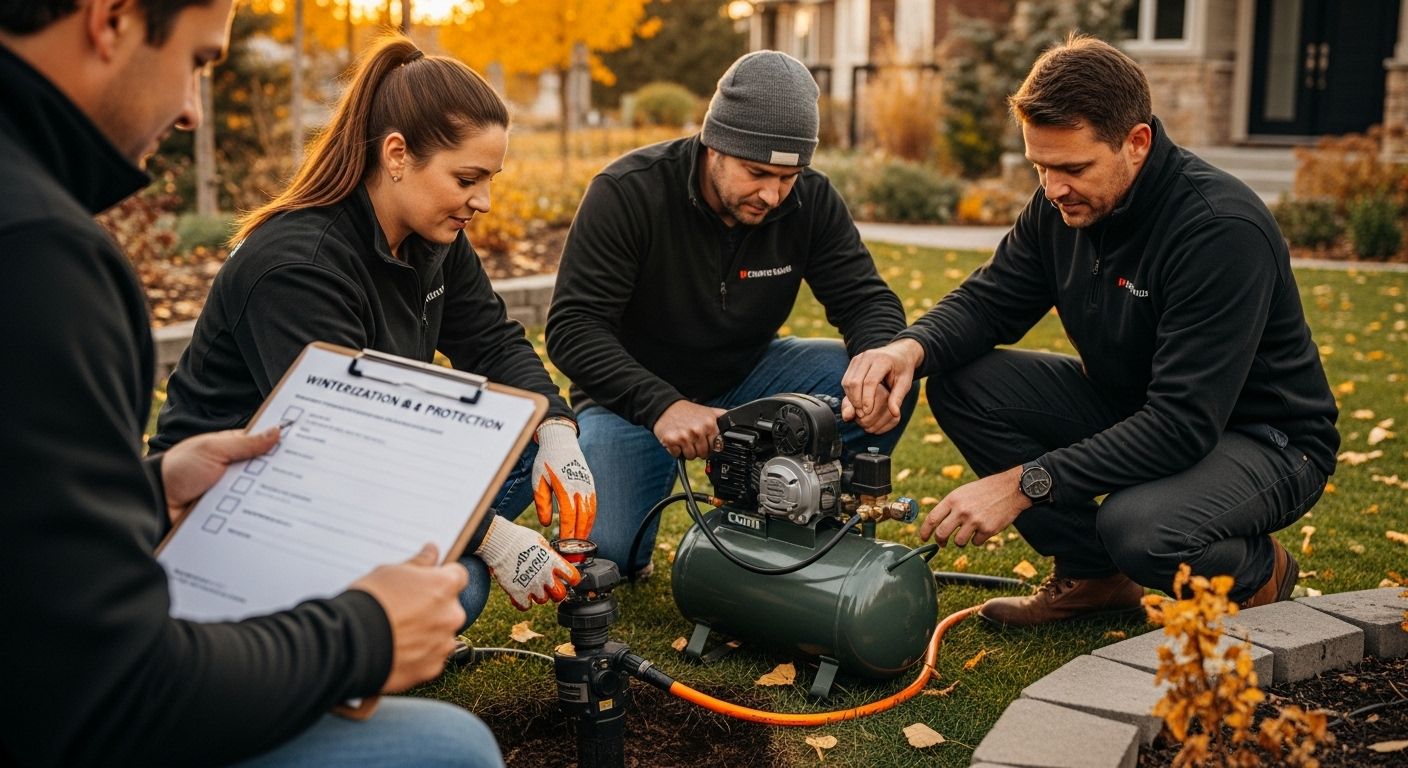
Winterization represents a critical maintenance step for Calgary irrigation systems. The region’s extreme winter temperatures demand comprehensive system protection to prevent freeze damage. Property owners must completely drain irrigation lines, disconnect water sources, and protect above-ground components before the first frost.
Professional irrigation specialists recommend a multi-step winterization process. This includes using compressed air to remove residual water from pipes, valves, and sprinkler heads, preventing ice formation that could cause structural damage. Insulating exposed components and storing removable parts indoors provides an additional layer of protection against Calgary’s harsh winter conditions.
Successful irrigation system maintenance requires a combination of regular inspections, proactive repairs, and seasonal preparedness. Property owners should consider professional maintenance services that can provide comprehensive system evaluations, ensuring optimal performance and longevity. By investing time and resources in proper maintenance, Calgary residents can protect their irrigation infrastructure and maintain beautiful, healthy landscapes throughout the year.
The following table outlines key seasonal and routine maintenance tasks for Calgary irrigation systems, helping ensure ongoing performance and protection through changing conditions.
| Maintenance Task | Timing/Frequency | Purpose |
|---|---|---|
| Spring System Startup & Inspection | Early spring (annually) | Check for winter damage, debris, and system function |
| Valve & Controller Checks | Spring & as needed | Ensure proper operation and replace batteries |
| Leak & Sprinkler Head Evaluation | Several times per season | Fix misalignments, leaks, and maintain water efficiency |
| Smart System Diagnostics | Ongoing | Monitor system performance, detect issues |
| Rain/Frost Sensor Adjustment | Seasonally/as weather changes | Optimize watering, prevent waste |
| Winterization (drain, blowout, store) | Before first frost (annually) | Prevent freeze damage and protect components |
Frequently Asked Questions
What are the different types of irrigation systems suitable for Calgary properties?
Calgary property owners typically have several irrigation options, including sprinkler systems, drip irrigation systems, and subsurface irrigation systems. Each method has unique advantages depending on specific landscape needs and environmental conditions.
How does drip irrigation compare to sprinkler systems in terms of water efficiency?
Drip irrigation systems can save up to 50% more water than traditional sprinkler systems. They directly deliver water to plant roots, minimizing evaporation and runoff, making them highly efficient for maintaining healthy gardens and landscapes in Calgary’s semi-arid climate.
What factors should I consider when choosing an irrigation system for my property?
Key factors include the size of your property, soil type, climate conditions, and landscape complexity. It’s essential to assess how much water different plants need and how well your chosen irrigation method will adapt to these requirements while promoting water conservation.
How should I maintain my irrigation system throughout the year?
Regular maintenance is crucial, including seasonal inspections, checking for leaks or misalignments, and ensuring proper winterization to prevent freeze damage. Scheduling inspections in spring and preparing the system for winter will help maintain optimal performance and efficiency.
Elevate Your Irrigation With Calgary’s Trusted Landscape Experts
Struggling to choose the right irrigation system for Calgary’s unpredictable climate? Unsure how to balance water efficiency and landscape health with our city’s unique soil and weather patterns? Many property owners face these same challenges when trying to keep lawns and gardens healthy, especially with the need for smart water conservation and year-round reliability. The right solution can make all the difference for your curb appeal, landscape value, and ongoing maintenance peace of mind.

Let the professionals at Ace Landscapes take the guesswork out of your irrigation and landscape care. Our team specializes in custom irrigation system design and installation tailored to Calgary’s environment, as well as full-service maintenance that addresses all your property’s needs in every season. Don’t wait for summer watering woes or costly system breakdowns. Contact Ace Landscapes today to schedule a site assessment and see how our expertise can protect your investment and simplify your outdoor living.