What Are Irrigation Systems? Your Calgary Property Guide
August 10, 2025What Is Landscape Design? Expert Guide for Calgary Properties
August 12, 2025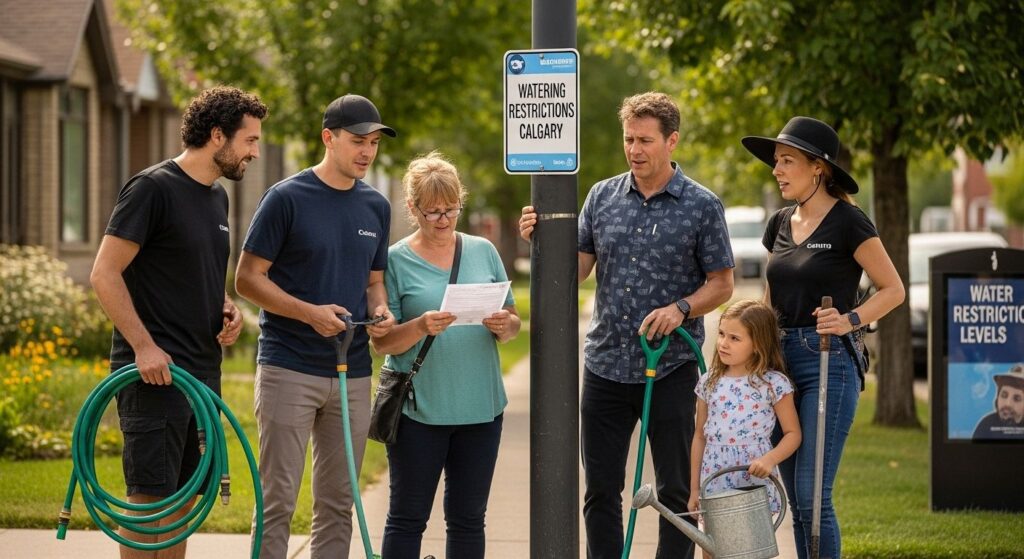
Calgary’s water restrictions affect every neighbourhood, putting a spotlight on lawns and landscaping this year. Most people are caught off guard by how strict these rules actually are. Fines for breaking the rules start at $400 for homeowners and climb to $3,000 for businesses but the real surprise is how creative property owners need to get just to avoid a brown yard and a hefty ticket.
Table of Contents
- Understanding Calgary’s Watering Restrictions
- Who Is Affected And Why It Matters
- Tips For Water-Efficient Landscaping Compliance
- Solutions For Property Managers, Hoas, And Businesses
Quick Summary
| Takeaway | Explanation |
|---|---|
| Be aware of water stages | Calgary has four water restriction stages based on river flow and water supply levels. Each stage has specific rules for outdoor water use. |
| Compliance is mandatory | All property owners must follow watering restrictions or face substantial fines. Violators may incur penalties starting at $400 for residential and up to $3,000 for commercial properties. |
| Invest in drought-resistant landscaping | To comply, property owners should choose native plants that require less water, helping maintain aesthetics while minimizing usage during restrictions. |
| Implement smart irrigation technologies | Adopting advanced irrigation systems can significantly reduce water consumption by delivering water efficiently to plant roots based on real-time conditions. |
| Education and community efforts matter | Property managers and HOAs should educate stakeholders on conservation strategies, promoting community-wide engagement in sustainable water management practices. |
Understanding Calgary’s Watering Restrictions
Water conservation is a critical concern for Calgary residents, with municipal authorities implementing strategic watering restrictions to manage the city’s precious water resources. The City of Calgary has developed a comprehensive system of water restrictions designed to ensure sustainable water usage during periods of environmental stress.
The Four Stages of Water Restriction Levels
To help property owners understand what is and isn’t allowed during each stage, here’s a summary of key restrictions and penalties at all four water restriction levels in Calgary:
| Restriction Stage | Outdoor Water Use Allowed | Residential Fine | Commercial Fine | Example Activities Impacted |
|---|---|---|---|---|
| Stage 1 | Limited (e.g., 1x/week, limited hours) | $400 | $3,000 | Lawn watering (scheduled), gardens |
| Stage 2 | Further reduced, stricter schedule | $400 | $3,000 | Lawn/garden water even more restricted |
| Stage 3 | Most outdoor use banned, exceptions for health/safety | $400 | $3,000 | Lawn/garden watering prohibited |
| Stage 4 | All outdoor potable water use banned | $400 | $3,000 | No watering, no car wash, no pools |
This table provides a clear comparison of what each restriction level means for private and commercial properties.
Calgary’s water restriction system is structured around four distinct stages, each representing escalating levels of water conservation measures. These stages are triggered by specific environmental conditions, primarily related to river flow levels and overall water supply. According to the city’s official declaration, the restrictions are not arbitrary but carefully calculated responses to real-time water availability.
In Stage 1, which was implemented in August 2023, residents face moderate limitations. Outdoor water usage is restricted to specific days and times, typically allowing lawn watering once per week for a maximum of two hours. This initial stage serves as an early intervention to reduce non-essential water consumption without imposing extreme measures.
As conditions worsen, the city can progress to more stringent stages. By August 2024, Calgary escalated to Stage 4 restrictions, which represent the most severe level of water conservation. At this stage, all outdoor use of potable water is prohibited. This means residents cannot water lawns, wash vehicles, fill swimming pools, or engage in any non-essential water activities that are not critical for health and safety.
Impact on Property Owners
Property owners must pay close attention to these changing restrictions. Compliance is not optional. Violations can result in significant fines and penalties. The restrictions apply to residential properties, commercial landscapes, and public spaces alike. Homeowners with established gardens, new landscaping, or significant green spaces need to develop adaptive strategies to maintain their outdoor environments while respecting water conservation guidelines.
The restrictions require property owners to be proactive and strategic. This might involve investing in drought-resistant landscaping, collecting rainwater, adjusting irrigation systems, or selecting plant species that require minimal water. Smart irrigation technologies and water-efficient gardening techniques become crucial tools for property owners navigating these challenging water management scenarios.
Understanding these watering restrictions is more than a legal obligation. It represents a collective responsibility to protect Calgary’s water resources. By adhering to these guidelines, residents contribute to the city’s long-term environmental sustainability and help ensure water availability during critical periods of drought or reduced natural water flow.
Stay informed about current restriction levels by regularly checking the City of Calgary’s official website or subscribing to municipal water conservation alerts. Being proactive and adaptable is key to successfully managing your property’s water needs while supporting the community’s broader environmental goals.
Who Is Affected and Why It Matters
Watering restrictions in Calgary impact a wide range of property owners and stakeholders, creating a comprehensive approach to water conservation that touches every corner of the urban landscape. The City of Calgary Water Utility enforces these restrictions across all municipal water customers, ensuring a unified response to water scarcity challenges.
Residential Property Owners
Homeowners bear the most immediate and visible impact of watering restrictions. Single-family residences, condominiums, and apartment complexes must carefully navigate the intricate rules governing outdoor water usage. According to the city’s official announcement, restrictions are implemented based on house numbers, with specific days allocated for lawn and garden watering. For instance, during Stage 1 restrictions, residents can only use sprinklers one day per week for up to two hours, depending on their address.
The consequences of non-compliance are significant. Residential property owners face potential fines starting at $400 for violating water restriction guidelines. This financial penalty underscores the city’s commitment to water conservation and motivates residents to adopt more sustainable landscaping practices. Homeowners must become adept at strategic water management, potentially investing in drought-resistant plants, efficient irrigation systems, and alternative landscaping techniques that minimize water consumption.
Commercial and Institutional Entities
Business owners, commercial property managers, and institutional facilities are equally subject to these stringent water restrictions. Starting August 26, 2024, Stage 4 restrictions prohibit all outdoor use of potable water for commercial properties. This includes critical limitations on:
- Washing outdoor surfaces
- Using sprinkler systems
- Filling decorative water features
- Maintaining landscape irrigation
Commercial entities face even more substantial financial repercussions, with potential fines escalating to $3,000 for violations. These restrictions challenge businesses to reimagine their exterior maintenance strategies, potentially requiring significant investments in water-efficient technologies and landscape redesigns.
The impact extends beyond immediate financial considerations. Commercial properties must now view water conservation as a fundamental aspect of their operational strategy. Landscaping, traditionally seen as a aesthetic element, becomes a complex exercise in environmental responsibility and resource management.
These water restrictions represent more than bureaucratic regulations. They embody a collective commitment to environmental stewardship, reflecting Calgary’s proactive approach to managing limited water resources. By implementing these measures, the city addresses critical challenges related to drought, climate change, and sustainable urban development.
Property owners across residential and commercial sectors must view these restrictions as an opportunity for innovation. Adapting to these guidelines requires creativity, strategic planning, and a willingness to embrace more sustainable practices. Those who successfully navigate these challenges will not only avoid potential fines but also contribute to the broader environmental goals of water conservation in Calgary.
Tips for Water-Efficient Landscaping Compliance
Navigating Calgary’s water restrictions requires strategic landscaping approaches that balance aesthetic appeal with water conservation. Property owners must develop innovative solutions to maintain attractive outdoor spaces while adhering to strict municipal guidelines.
Selecting Drought-Resistant Plantings
Landscape Alberta recommends focusing on native plant species that naturally thrive in Calgary’s challenging climate. Native plants have evolved to withstand periods of limited water, making them ideal for water-restricted environments. Xeriscaping principles become crucial, emphasizing plant selections that require minimal irrigation.
Consider incorporating native Alberta species like:
- Blue Grama Grass
- Yarrow
- Prairie Junegrass
- Rough Fescue
These plants not only survive with minimal water but also support local ecosystems. Drought-resistant plants reduce water dependency and create landscapes that remain vibrant even during strict water restriction periods. Strategic plant selection becomes a critical component of water-efficient landscaping.
Smart Irrigation Techniques
Alberta Agriculture and Irrigation emphasizes the importance of precision in water management. Implementing advanced irrigation technologies can significantly reduce water consumption while maintaining landscape health. Micro-irrigation systems, drip irrigation, and smart controllers represent cutting-edge solutions for water-conscious property owners.
Key strategies include:
- Timing: Water during early morning or late evening to minimize evaporation
- Precision: Use targeted irrigation methods that deliver water directly to plant roots
- Monitoring: Install moisture sensors to prevent overwatering
Property owners should consider investing in weather-based irrigation controllers that automatically adjust watering schedules based on real-time environmental conditions. These systems can reduce water usage by up to 50% compared to traditional irrigation methods.
Landscape Design Optimization
Landscape design plays a crucial role in water conservation. Creating multi-functional outdoor spaces that minimize water requirements requires strategic planning. Incorporate hardscaping elements like gravel pathways, rock gardens, and mulched areas that reduce overall water demand.
Mulching becomes an essential technique for water retention. A 7-10 cm layer of organic mulch can significantly reduce soil moisture evaporation, helping plants retain water during restricted watering periods. Additionally, consider creating microclimates within your landscape that provide natural shade and reduce water stress for more sensitive plants.
Implementing these water-efficient landscaping strategies transforms water restrictions from a challenge into an opportunity for innovative design. Property owners who adapt quickly will not only comply with municipal guidelines but also create resilient, beautiful outdoor spaces that thrive under challenging conditions.
Remember, water-efficient landscaping is more than a temporary response to restrictions. It represents a long-term commitment to sustainable property management and environmental stewardship in Calgary.
Solutions for Property Managers, HOAs, and Businesses
Property managers, homeowners associations (HOAs), and businesses face unique challenges in maintaining attractive landscapes while adhering to Calgary’s strict water restrictions. Strategic planning and innovative approaches become essential for managing outdoor spaces effectively during periods of limited water usage.
Comprehensive Water Management Strategies
The EPA WaterSense program provides critical guidance for organizations seeking to optimize water conservation efforts. Property managers and HOAs must develop comprehensive water management plans that go beyond simple restriction compliance. This involves conducting thorough irrigation system audits, implementing precise water-use protocols, and creating long-term sustainability strategies.
Key components of an effective water management plan include:
- Inventory: Detailed mapping of existing landscape irrigation systems
- Audit: Regular assessment of water usage and potential inefficiencies
- Monitoring: Installation of smart water measurement technologies
Businesses and HOAs should consider creating dedicated water conservation committees that develop and implement strategic approaches to landscape maintenance. These teams can track water usage, identify optimization opportunities, and educate stakeholders about water-efficient practices.
Landscape Redesign and Adaptation
The Alabama Cooperative Extension System highlights the importance of proactive landscape redesign. Property managers can significantly reduce water consumption by reimagining outdoor spaces through strategic landscaping techniques. This approach involves replacing water-intensive landscaping with drought-resistant alternatives and implementing water-efficient design principles.
Recommended adaptation strategies include:
- Replacing traditional turf areas with native, low-water-requirement plantings
- Creating xeriscaped zones that minimize irrigation needs
- Implementing rainwater harvesting systems
- Designing landscapes with natural water retention features
Commercial properties and HOAs should view landscape redesign as an investment in long-term sustainability. By transitioning to water-efficient designs, organizations can reduce maintenance costs, minimize water consumption, and create more resilient outdoor environments.
Technology and Education
Property managers, HOAs, and businesses can benefit from a clear overview of the core water management solutions discussed in this article. The following table summarizes key strategies for organizational water conservation and their main benefits:
| Strategy | Description | Main Benefit |
|---|---|---|
| Comprehensive Water Management | Inventory and audit irrigation, smart monitoring | Reduced waste, improved control |
| Landscape Redesign & Adaptation | Replace turf, add native plants, rainwater harvesting | Lower water consumption, cost savings |
| Technology Adoption | Use smart controllers, sensors, real-time systems | Efficient water use, reduced labour |
| Education & Communication | Inform and engage stakeholders about water restrictions | Better compliance, community support |
This table organizes practical solutions for organizations looking to thrive under strict watering restrictions in Calgary.
Successful water conservation requires a multifaceted approach that combines technological solutions with comprehensive education. Property managers and HOA boards must invest in advanced irrigation technologies that provide precise water management. Smart controllers, moisture sensors, and real-time monitoring systems can dramatically reduce water waste while maintaining landscape health.
Education plays a crucial role in successful water conservation efforts. Organizations should develop robust communication strategies that inform residents, employees, and stakeholders about water restrictions, conservation techniques, and the broader environmental implications of water management.
Implementing these solutions requires a collaborative approach. Property managers, HOAs, and businesses must work together, sharing best practices and supporting community-wide water conservation efforts. By adopting a proactive and innovative approach, these organizations can transform water restrictions from a challenge into an opportunity for sustainable landscape management.
Ultimately, effective water conservation is about more than compliance. It represents a commitment to environmental stewardship, community resilience, and responsible resource management in Calgary’s changing climate.
Frequently Asked Questions
What are the different stages of watering restrictions in Calgary?
Calgary has four stages of watering restrictions: Stage 1 (moderate restrictions), Stage 2 (further reduced usage), Stage 3 (most outdoor use banned), and Stage 4 (all outdoor potable water use banned). Each stage has specific rules regarding when and how often residents can water their lawns and gardens.
What are the consequences of violating watering restrictions in Calgary?
Violating watering restrictions can result in significant fines, starting at $400 for residential properties and escalating up to $3,000 for commercial properties. It is crucial for property owners to comply with the restrictions to avoid these penalties.
How can property owners maintain their lawns during watering restrictions?
Property owners can maintain their lawns by investing in drought-resistant plants, using smart irrigation technologies, and implementing landscaping strategies such as xeriscaping. These methods minimize water usage while keeping outdoor areas visually appealing.
What should property managers and HOAs do during watering restrictions?
Property managers and HOAs should develop comprehensive water management plans that include irrigation audits, landscape redesigns, and community education initiatives on water conservation. This collaboration helps promote sustainable practices and ensures compliance with municipal regulations.
Protect Your Investment and Beat Watering Restrictions With Expert Help
Are you worried about keeping your property healthy and beautiful under Calgary’s harsh watering restrictions? Many property owners feel the pressure to maintain curb appeal while following strict city rules and avoiding hefty fines. The recent article highlights the stress of balancing compliance with attractive landscaping, especially as regulations move through all four restriction stages and threaten not just your lawn but the value and impression of your property as well.
If you want proven solutions that work under real Calgary conditions, let Ace Landscapes guide you. We specialize in drought-tolerant landscaping, smart irrigation, and complete property maintenance tailored to your needs. Our team knows the local bylaws inside out and can help you transition to a resilient outdoor space that saves water and meets all city requirements. Explore how our landscape design and maintenance services can keep your property thriving while staying compliant, or contact us directly through our contact page to book a consultation today. Make the change now and ensure your landscape stands out, no matter the restrictions.