
Sustainable Landscape Design in Calgary: 2025 Guide for Homes & Businesses
August 5, 2025
Best Ornamental Grasses Calgary 2025: Top Choices & Care
August 7, 2025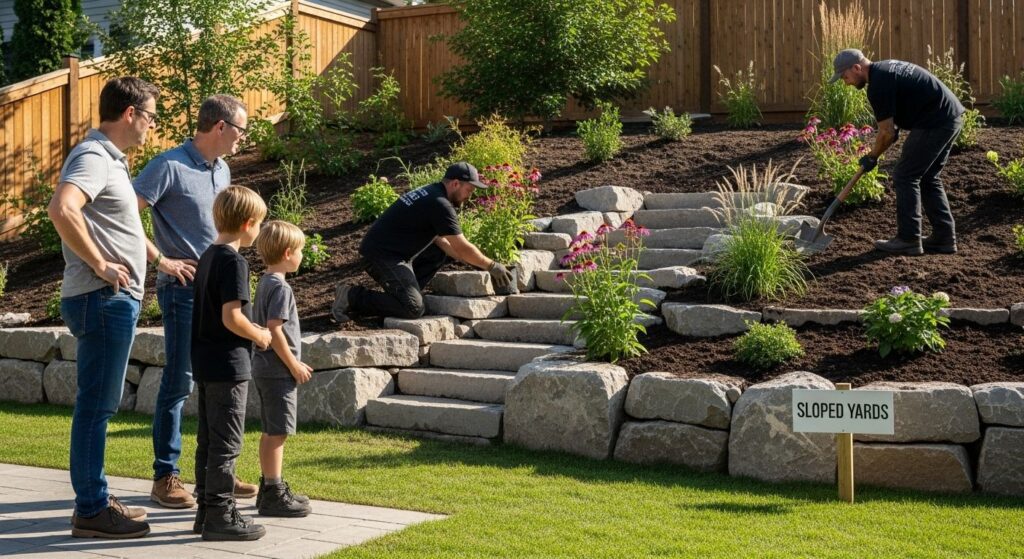
Calgary homeowners with sloped yards face a unique uphill battle and the terrain here is anything but forgiving. It might sound like a massive headache with costs spiraling out of control, especially since repair bills for drainage problems on slopes can reach $50,000. Most people think sloped yards are doomed to be wasted space but smart design turns these tricky sites into some of the most stunning and useable yards in the city.
Table of Contents
- Key Challenges Of Sloped Yards In Calgary
- Best Design Ideas For Sloped Landscaping
- Practical Solutions For Erosion And Drainage
- Custom Landscaping Services For Calgary Properties
Quick Summary
| Takeaway | Explanation |
|---|---|
| Prioritize soil erosion control methods | Implement terracing, retaining walls, and vegetation to stabilize sloped landscapes. |
| Invest in sophisticated drainage solutions | Use French drains and bioswales to manage water runoff efficiently and protect your property. |
| Select native plants for stabilization | Use native species with strong root systems to enhance soil stability while ensuring aesthetic appeal. |
| Conduct a detailed site analysis | Perform comprehensive assessments to tailor landscaping designs to the unique features of your property. |
| Integrate engineering with landscape design | Use advanced techniques for retaining walls and grading to create functional, sustainable outdoor spaces. |
Key Challenges of Sloped Yards in Calgary
Sloped yards in Calgary present unique landscaping challenges that require strategic planning and specialized design approaches. The city’s diverse terrain and extreme climate conditions create complex environmental considerations for homeowners and landscape professionals.
Soil Erosion and Stability Concerns
One of the most significant challenges in landscaping for sloped yards is managing soil erosion. Calgary’s topography often features dramatic elevation changes that make ground stability a critical issue. Research from the University of Calgary’s Geoscience Department indicates that slopes with gradients steeper than 15% are particularly vulnerable to erosion, especially during spring snowmelt and heavy rainfall periods.
The region’s clay-based soils compound this challenge. These soils have poor drainage characteristics and tend to become saturated quickly, increasing the risk of landslides and ground movement. Homeowners must implement robust erosion control strategies, such as terracing, retaining walls, and strategic vegetation placement to mitigate these risks.
Drainage and Water Management
Effective water management becomes exponentially more complex on sloped properties. Alberta Environment and Parks reports that improper drainage can lead to significant property damage, with repair costs ranging from $10,000 to $50,000 for severe cases.
Sloped yards require sophisticated drainage solutions that prevent water accumulation, redirect runoff, and protect both the landscape and the home’s foundation. This often involves installing complex drainage systems, including French drains, swales, and strategic grading that channels water away from critical infrastructure.
Microclimatic Variations and Plant Selection
Sloped landscapes create unique microclimatic zones that dramatically impact plant survival and landscape design. Different elevations and aspects can experience significantly different sunlight exposure, wind patterns, and temperature ranges. Southern-facing slopes in Calgary receive more direct sunlight and experience faster warming, while northern slopes remain cooler and retain moisture longer.
This variation demands highly specialized plant selection and strategic landscape design. Native plants adapted to Calgary’s challenging climate become crucial. Ornamental grasses, drought-resistant perennials, and strategically placed shrubs can help stabilize slopes while creating visually appealing landscapes that withstand the region’s extreme temperature fluctuations.
Landscaping for sloped yards in Calgary is not simply about aesthetic considerations but requires a comprehensive understanding of geological, hydrological, and ecological factors. Successful implementations demand professional expertise, careful planning, and a nuanced approach that respects the natural characteristics of the terrain.
Best Design Ideas for Sloped Landscaping
Transforming challenging sloped terrain into a stunning and functional landscape requires innovative design strategies that maximize both aesthetic appeal and practical functionality. Calgary homeowners can leverage several creative approaches to turn steep yards into breathtaking outdoor spaces.
Terraced Landscape Designs
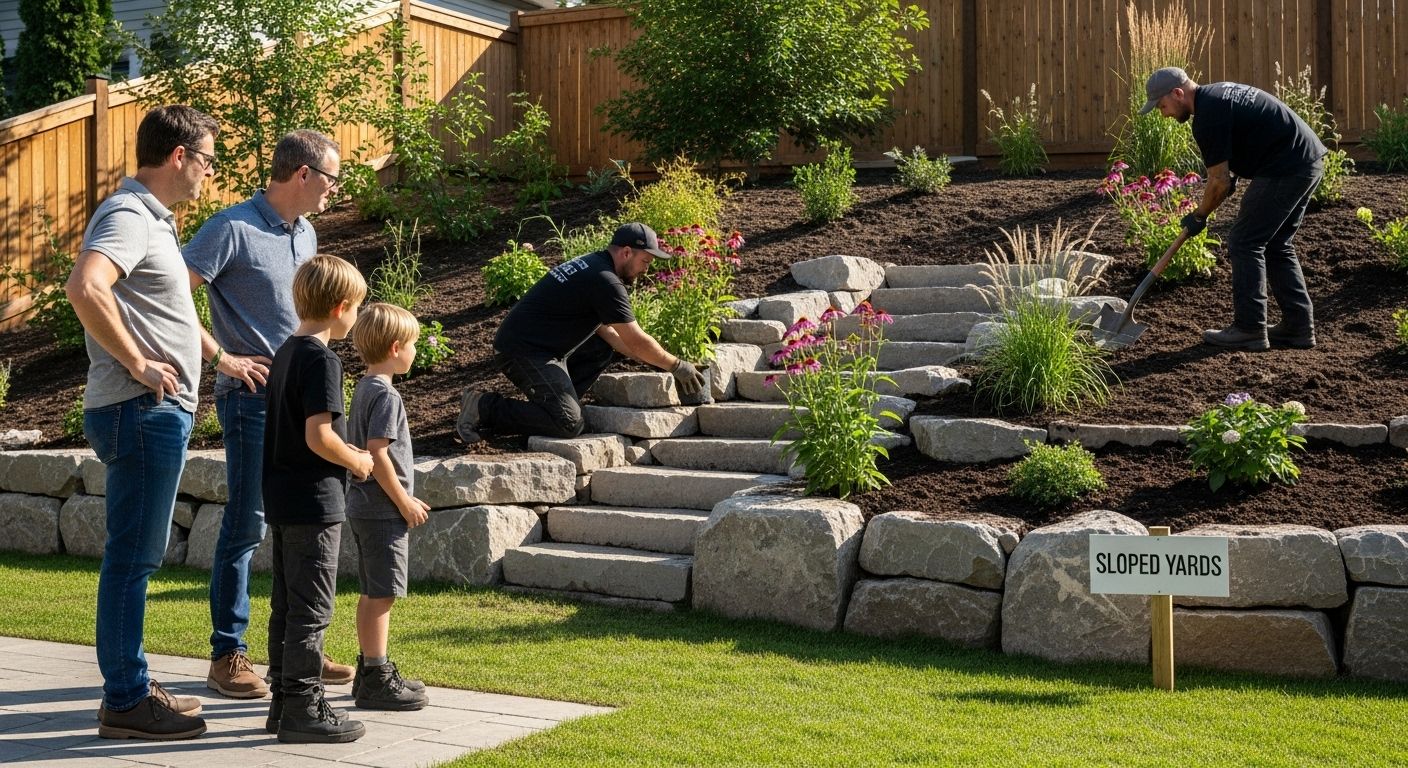
Terracing represents a premier solution for managing sloped yards, creating multiple level areas that transform challenging gradients into usable spaces. Landscape Architecture Magazine highlights that well-executed terracing can increase functional outdoor space by up to 40% while simultaneously addressing erosion concerns.
Multi-level terraces allow homeowners to create distinct zones for different purposes. Lower terraces might accommodate seating areas or garden spaces, while upper levels could host native plantings or decorative elements. Strategically placed retaining walls using natural stone or robust materials like reinforced concrete provide structural integrity and visual interest.
Strategic Hardscaping and Pathway Solutions
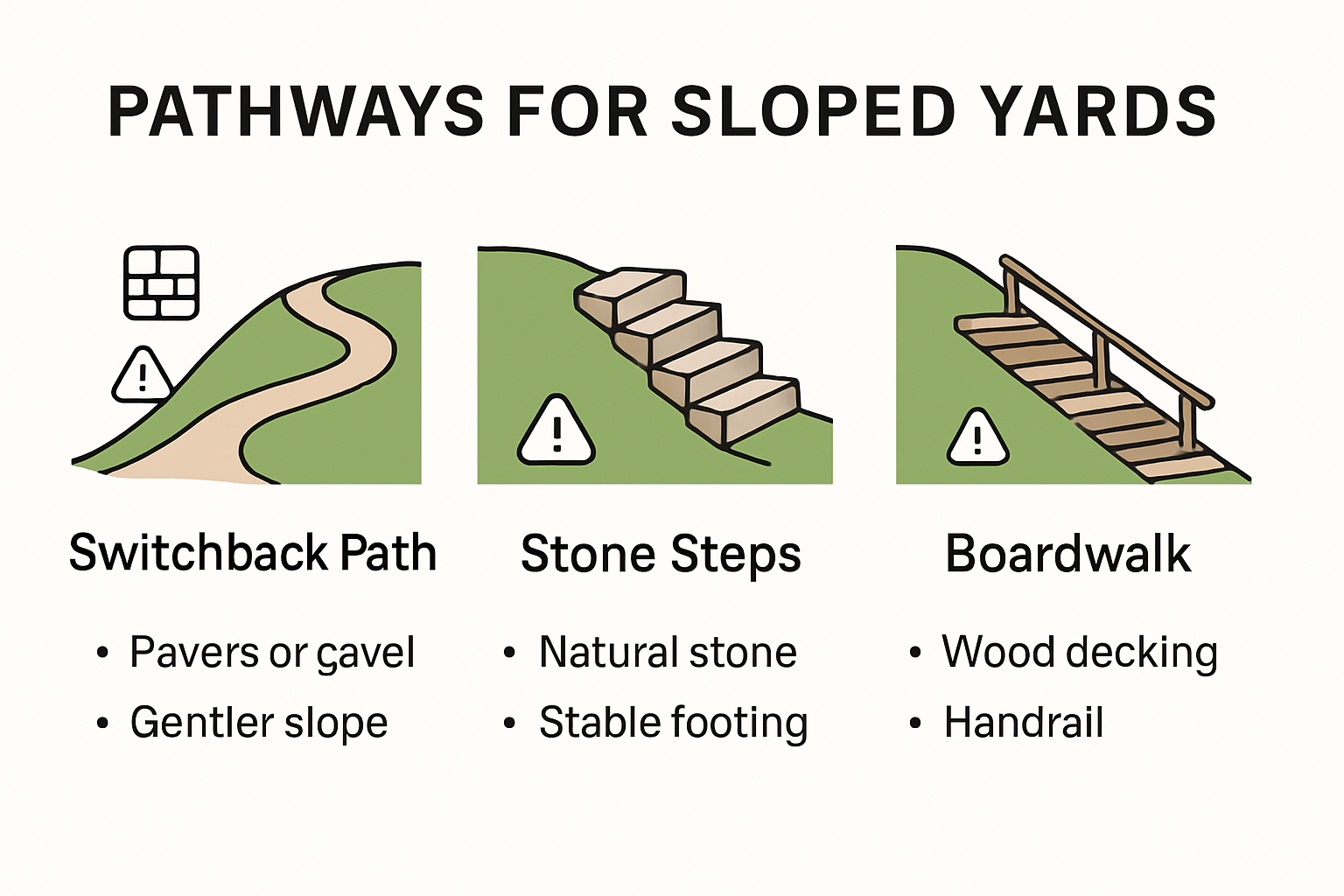
Navigating sloped terrain requires thoughtful hardscaping design. Canadian Landscaping Association recommends incorporating switchback pathways, steps, and carefully graded walkways that make steep areas accessible and safe. Curved pathways that gradually ascend or descend can transform challenging gradients into elegant landscape features.
Hardscaping elements like natural stone steps, wooden boardwalks, and integrated staircases not only improve accessibility but also create visual rhythm and architectural interest. Using materials that complement Calgary’s natural environment – such as local quarried stone or weathered timber – ensures the landscape feels harmonious with its surroundings.
Native Plant Strategies for Slope Stabilization
Selecting appropriate vegetation is crucial for creating sustainable and resilient sloped landscapes. Native plants with extensive root systems play a critical role in soil stabilization and erosion prevention. Species like alpine meadow grasses, prairie coneflowers, and native shrubs such as saskatoon berries provide both ecological benefits and aesthetic appeal.
These native plants are exceptionally well-adapted to Calgary’s challenging climate, requiring minimal maintenance while delivering maximum landscape performance. Strategically layering different plant heights and root structures creates a natural terracing effect, further enhancing slope stability. Ground covers with dense root networks can be particularly effective in protecting against soil movement and providing year-round visual interest.
Successful sloped landscaping in Calgary demands a holistic approach that balances engineering principles with creative design. By understanding the unique challenges of the terrain and employing innovative strategies, homeowners can transform challenging gradients into stunning, functional outdoor environments that celebrate the natural beauty of the region.
To help you compare the main solutions discussed in this section, here is a table summarizing their purposes and typical materials:
| Solution | Main Purpose | Typical Materials/Plants |
|---|---|---|
| Terracing | Create usable flat areas, curtail erosion | Natural stone, reinforced concrete, timber |
| Switchback Pathways/Hardscaping | Accessibility, visual structure | Local stone, weathered timber, boardwalks |
| Native Plant Slope Stabilization | Soil stabilization, low maintenance | Alpine meadow grasses, prairie coneflowers, saskatoon berries |
Practical Solutions for Erosion and Drainage
Managing erosion and drainage on sloped landscapes requires a comprehensive approach that combines engineering principles, strategic design, and targeted interventions. Calgary’s unique geological and climatic conditions demand sophisticated solutions that protect property integrity and maintain landscape health.
Advanced Drainage System Strategies
Environment Canada reports that improper drainage can cause significant property damage, with water-related issues accounting for nearly 40% of residential landscape maintenance challenges. Implementing robust drainage solutions becomes critical for sloped properties.
French drains represent a sophisticated drainage technique particularly effective in Calgary’s terrain. These underground drainage systems utilize perforated pipes surrounded by gravel, creating an efficient channel for water redirection. Strategic placement along slope contours allows water to be safely diverted away from critical infrastructure, preventing soil saturation and potential foundation damage.
Another advanced technique involves creating bioswales – naturalistic drainage channels filled with native vegetation. These living drainage systems not only manage water flow but also filter sediments, reduce water velocity, and provide ecological benefits. Native grasses with deep root systems can significantly enhance the swale’s water management capabilities.
Erosion Control Techniques
Alberta Soil Conservation Association emphasizes that effective erosion control requires a multi-layered approach. Geotextile fabrics and erosion control blankets provide immediate ground stabilization, creating a protective layer that prevents soil displacement during heavy rainfall or snowmelt.
Mechanical interventions like retaining walls play a crucial role in slope stabilization. Engineered walls constructed from interlocking concrete blocks, natural stone, or reinforced timber can create stable terraces that distribute soil weight and reduce erosion potential. These structures not only provide functional support but can also serve as aesthetic landscape elements.
Vegetation-Based Stabilization Methods
Native plant communities offer powerful natural solutions for erosion control. Plants with extensive root systems create a living matrix that binds soil particles, reduces water runoff velocity, and enhances overall landscape stability. Species like blue grama grass, alpine timothy, and various sedge varieties are exceptionally effective in Calgary’s climate.
Strategic vegetation layering involves creating multiple plant communities at different slope elevations. Lower slope areas might feature ground-covering plants with dense root networks, while mid-slope zones could host deeper-rooted shrubs and grasses. This approach creates a comprehensive biological stabilization system that adapts to varying moisture and sunlight conditions.
Successful erosion and drainage management on sloped landscapes requires a holistic understanding of local environmental dynamics. By combining engineered solutions with natural stabilization techniques, Calgary homeowners can transform challenging terrain into resilient, beautiful outdoor spaces that withstand the region’s demanding environmental conditions.
Here’s a table comparing the erosion and drainage control methods you can use for sloped yards, with their core function and examples:
| Method | Function | Examples / Materials |
|---|---|---|
| French drains | Redirect water underground | Perforated pipe, gravel |
| Bioswales | Surface water management & filtration | Native grasses, engineered depressions |
| Geotextile fabrics/blankets | Temporary ground stabilization | Erosion control blankets, geotextiles |
| Retaining walls | Mechanical slope stabilization | Concrete blocks, stone, timber |
| Native vegetation layering | Long-term, biological erosion control | Blue grama grass, alpine timothy, sedges |
Custom Landscaping Services for Calgary Properties
Custom landscaping for sloped properties in Calgary demands specialized expertise that goes beyond standard design approaches. Professional services must address the unique geological, environmental, and aesthetic challenges presented by the city’s distinctive terrain.
Comprehensive Site Analysis and Design Planning
Virginia Cooperative Extension emphasizes the critical importance of thorough site assessment in slope landscaping. Professional landscapers conduct detailed evaluations that include comprehensive soil testing, precise gradient measurements, drainage mapping, and microclimate analysis. This meticulous approach ensures that every design element is strategically tailored to the specific characteristics of the property.
A comprehensive site analysis includes evaluating soil composition, identifying potential drainage challenges, assessing sunlight exposure, and understanding underground utility locations. Advanced technologies like drone mapping and 3D terrain modeling allow landscape professionals to create incredibly precise design plans that optimize both functional performance and aesthetic potential.
Specialized Engineering and Construction Techniques
Canadian Geotechnical Journal highlights that successful sloped landscaping requires advanced engineering interventions. Custom services often involve sophisticated stabilization techniques such as soil reinforcement, engineered retaining wall systems, and precision grading that mitigates erosion risks.
Professional landscaping teams utilize specialized equipment and techniques to manage challenging terrain. This might include hydraulic excavators for precise grading, laser-guided leveling systems, and custom anchoring methods for retaining walls. The goal extends beyond mere aesthetic improvement to creating sustainable, structurally sound outdoor environments that can withstand Calgary’s demanding climate conditions.
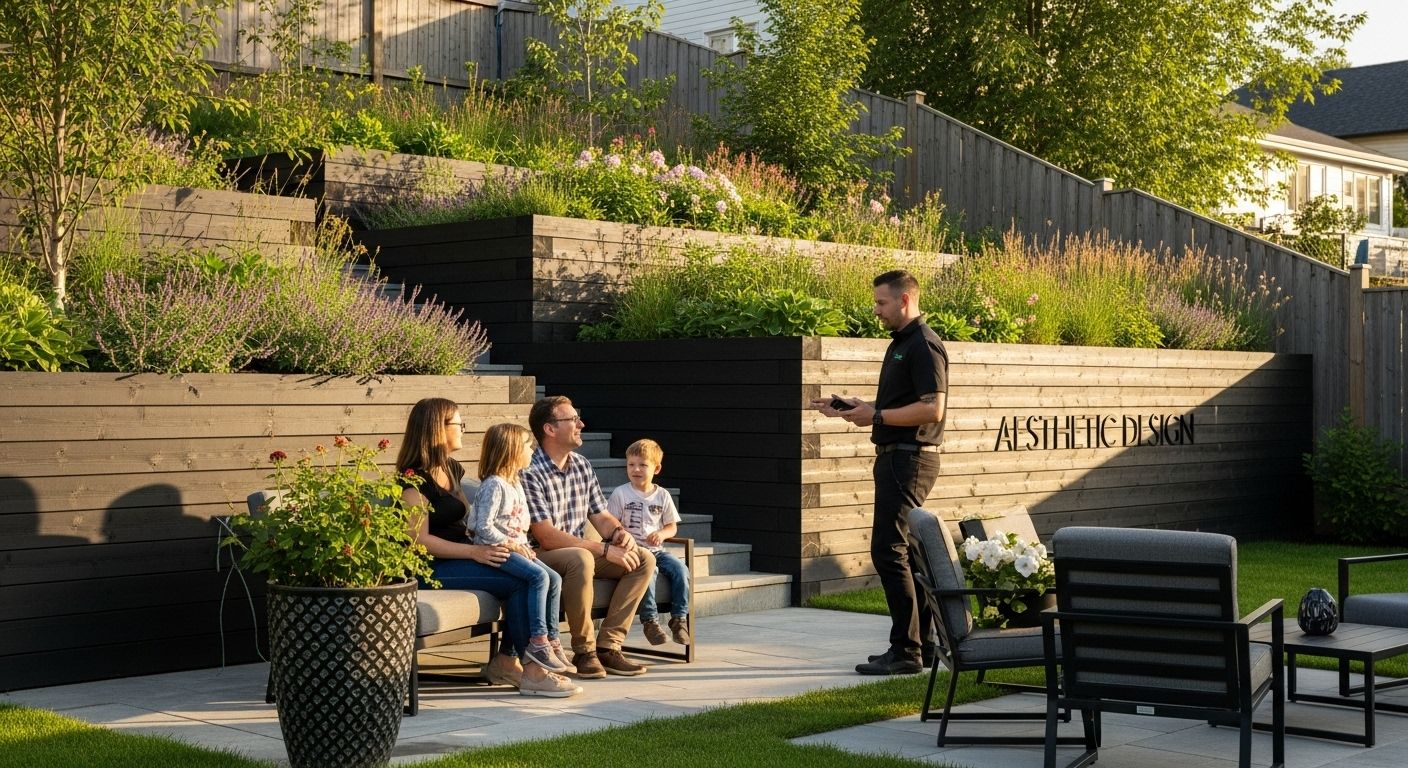
Integrated Ecological and Aesthetic Design
Custom landscaping services for sloped properties in Calgary require a holistic approach that balances ecological functionality with visual design. This means selecting native plant species that provide both slope stabilization and aesthetic appeal. Landscape designers create multi-layered plantings that include ground covers, shrubs, and strategically placed trees that work together to prevent soil erosion while creating visually stunning outdoor spaces.
Beyond plant selection, custom services include innovative design elements like integrated irrigation systems, carefully designed drainage solutions, and hardscaping features that complement the natural terrain. Professionals consider factors such as seasonal variations, wildlife interactions, and long-term landscape maintenance to develop comprehensive design solutions.
Successful custom landscaping for sloped properties represents a sophisticated blend of scientific understanding, engineering expertise, and creative design. By leveraging specialized knowledge and advanced techniques, landscape professionals can transform challenging terrain into beautiful, functional outdoor environments that enhance property value and provide lasting enjoyment for homeowners.
Frequently Asked Questions
What are the main challenges of landscaping a sloped yard in Calgary?
The key challenges involve managing soil erosion, ensuring effective water drainage, and selecting appropriate plants that thrive in the unique microclimates of sloped landscapes.
How can I prevent soil erosion in my sloped yard?
Implement methods such as terracing, using retaining walls, and planting native vegetation with deep root systems to stabilize the soil and minimize erosion risks.
What drainage solutions are effective for sloped properties?
Sophisticated drainage systems like French drains and bioswales are highly effective. French drains redirect water underground, while bioswales manage surface water through natural channels filled with vegetation.
Why should I use native plants in my sloped yard landscaping?
Native plants are better adapted to Calgary’s climate, requiring less maintenance and providing superior benefits for soil stabilization. Their extensive root systems help prevent erosion and promote a sustainable landscape.
Transform Your Sloped Yard Into a Standout Calgary Landscape
Has soil erosion or poor drainage in your sloped yard made outdoor living stressful and expensive? The article highlighted how difficult it can be to control runoff, install stability solutions like retaining walls, and select the right plants for Calgary’s unique climate. These are more than cosmetic issues. Left unchecked, they can lead to tens of thousands in repairs and wasted outdoor space. But with the right expertise, you can turn an uphill challenge into a unique and valuable outdoor oasis.
Ready for a practical, professionally engineered solution tailored to your property? Reach out to the team at Ace Landscapes to request a detailed site analysis or book a design consultation. Discover how our award-winning experience in custom retaining walls and slope landscaping offers both beauty and peace of mind. Act now to secure your spot for the next project season. Your sloped yard can finally work for you—see how today.