
Essential Fall Landscaping Tips for Calgary in 2025
July 23, 2025Low Maintenance Gardens: Calgary’s Top Solutions for 2025
July 25, 2025
Trying to keep your lawn green in Calgary can feel like an uphill battle. Most people do not realize how wildly the temperature swings here—Calgary sees up to 60 degrees Celsius difference between winter and summer. You would think that makes healthy lawns impossible, but the secret is all in choosing the right grass and timing your care. It turns out that with a few smart steps, even beginners can grow a lush lawn that survives Calgary’s wild weather.
Table of Contents
- Understanding Calgary’s Unique Lawn Challenges
- Essential Lawn Care Steps for New Homeowners
- Commercial and Community Lawn Maintenance Basics
- Seasonal Lawn Care Calendar for Calgary
Quick Summary
| Takeaway | Explanation |
|---|---|
| Evaluate soil before planting | Conduct a soil test to identify nutrient levels and pH, guiding necessary amendments for grass growth. |
| Choose resilient grass varieties | Opt for cool-season grasses like Kentucky bluegrass for optimal growth under Calgary’s fluctuating climate. |
| Implement seasonal care practices | Tailor maintenance tasks like aeration in spring and winterization in fall to enhance lawn health year-round. |
| Manage moisture and watering wisely | Deep, infrequent watering encourages stronger root development and reduces water stress during summer heat. |
| Focus on sustainable lawn care | Use eco-friendly techniques like native plant selection and minimal chemical usage to promote ecological balance. |
Understanding Calgary’s Unique Lawn Challenges
Lawn care in Calgary presents a distinctive set of challenges that set it apart from other regions in Canada. The city’s unique geographical location and extreme climate conditions demand a specialized approach to maintaining healthy and resilient grass. Homeowners and property managers must navigate a complex landscape of environmental factors that directly impact lawn health and sustainability.
Climate Extremes and Soil Conditions
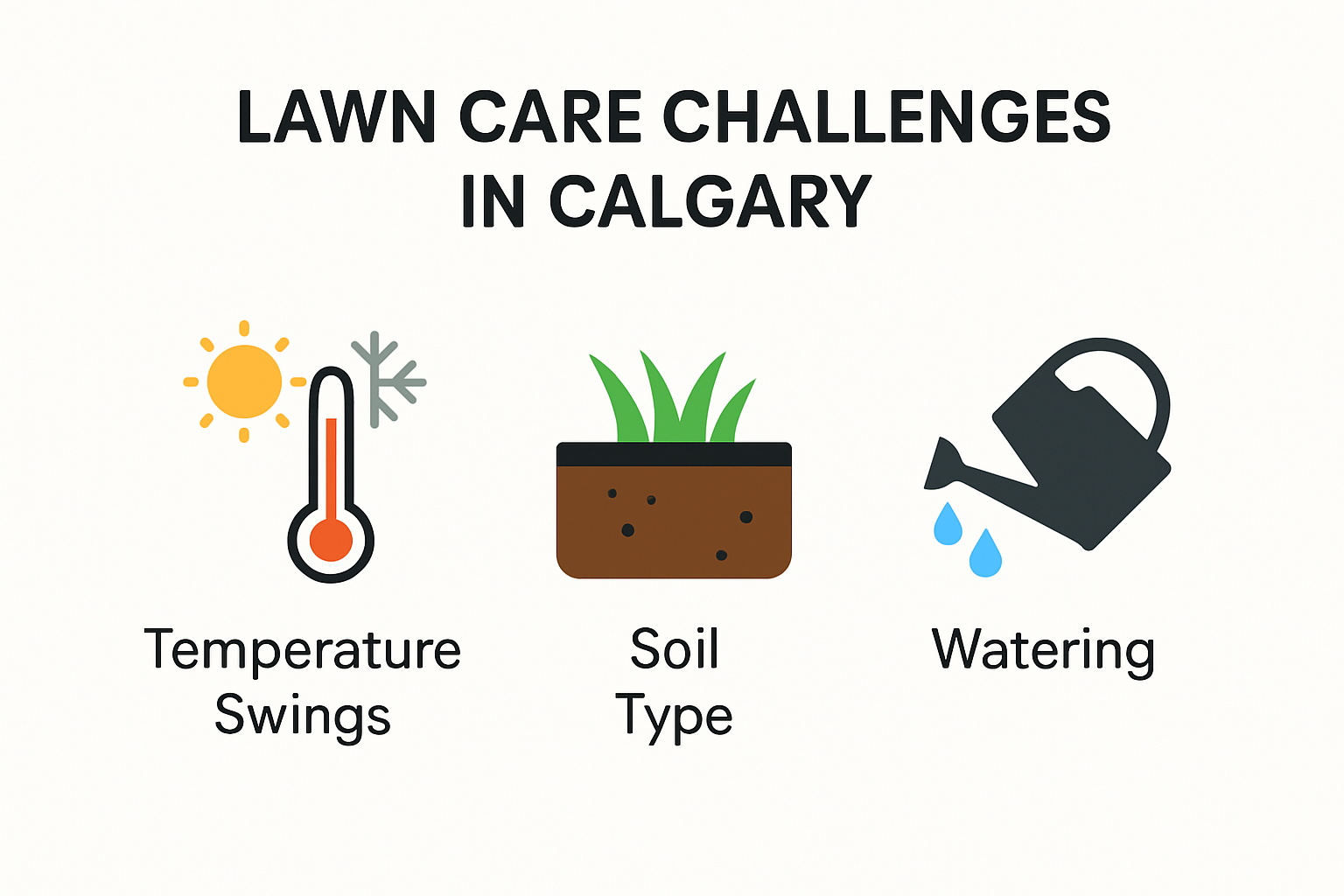
Calgary experiences dramatic temperature fluctuations that can wreak havoc on lawn ecosystems. Winters are brutally cold, with temperatures frequently dropping below -30°C, while summers can be intensely hot and dry. According to Environment Canada, the region experiences temperature ranges that can span over 60 degrees Celsius throughout the year, creating significant stress for grass and soil systems.
The local soil composition adds another layer of complexity. Calgary’s soil tends to be heavy clay-based, which impacts water retention and root development. Alberta Agriculture and Forestry reports that clay soils can become extremely compact, restricting nutrient absorption and water penetration. This means lawn care strategies must account for soil amendment and careful moisture management.
Seasonal Adaptation Strategies
Successful lawn care for beginners in Calgary requires understanding the precise timing of seasonal interventions. The short growing season demands strategic approaches to lawn maintenance. Grass varieties must be carefully selected to withstand extreme conditions, with cool-season grasses like Kentucky bluegrass and perennial ryegrass proving most resilient.
Spring presents a critical window for lawn rehabilitation. After months of snow cover and potential winter damage, homeowners need to focus on gentle dethatching, aeration, and overseeding. Summer requires intense moisture management and protection against heat stress. Conversely, fall becomes crucial for preparing lawns to survive the harsh winter months through proper fertilization and protection techniques.
Navigating these challenges requires more than standard lawn care practices. Calgary’s unique environmental conditions demand a nuanced, informed approach that respects the delicate balance of local ecosystems. Successful lawn maintenance is less about aggressive interventions and more about understanding and working with the natural rhythms of this demanding landscape.
Essential Lawn Care Steps for New Homeowners
Embarking on lawn care as a new homeowner can feel overwhelming, especially in a challenging environment like Calgary. Understanding the fundamental steps and developing a systematic approach will transform your outdoor space from a potential problem area into a thriving green landscape. Successful lawn maintenance requires knowledge, consistency, and strategic planning.
Soil Preparation and Assessment
Before diving into lawn care, comprehensive soil evaluation becomes critical. Alberta Gardening Association recommends professional soil testing to understand your specific lawn’s nutrient composition and pH levels. This diagnostic step reveals crucial information about potential deficiencies, allowing targeted interventions.
Soil preparation involves multiple critical elements. Clay-heavy soils prevalent in Calgary require significant amendment to improve drainage and nutrient absorption. Incorporating organic matter like compost can dramatically enhance soil structure. Professional landscapers suggest adding 2-3 inches of high-quality organic material and gently tilling it into existing soil to create a more hospitable environment for grass root development.

Grass Selection and Seeding Techniques
Choosing appropriate grass varieties represents a pivotal decision for Calgary homeowners. Cool-season grasses perform best in this region, with University of Alberta Horticulture Research recommending a mix of Kentucky bluegrass, perennial ryegrass, and fine fescue. These varieties demonstrate remarkable resilience against temperature extremes and drought conditions typical in southwestern Alberta.
Seeding requires precision and timing. Late summer to early fall provides optimal conditions for grass establishment, allowing root systems to develop before winter arrives. Proper seeding involves carefully spreading grass seed, ensuring even distribution, and maintaining consistent moisture during germination. New homeowners should invest in high-quality seed mixes specifically designed for prairie climate zones, avoiding generic or imported varieties that might struggle in local conditions.
Maintenance and Seasonal Care
Consistent maintenance distinguishes thriving lawns from struggling ones. Regular mowing plays a crucial role in grass health, with experts recommending maintaining grass height between 2.5 to 3 inches. Cutting too short stresses grass and makes it vulnerable to drought and pest invasions. Implementing a consistent mowing schedule that follows the one-third rule preventing removal of more than one-third of grass blade length helps maintain robust turf.
Watering techniques require strategic approach in Calgary’s variable climate. Deep, infrequent watering encourages deeper root growth compared to frequent shallow irrigation. Homeowners should aim for approximately 1 inch of water per week, adjusting based on rainfall and temperature. Early morning watering minimizes evaporation and reduces fungal growth risks.
Seasonal transitions demand specialized care. Spring involves gentle dethatching and aeration to break soil compaction. Summer requires vigilant moisture management and potential shade protection during intense heat. Fall becomes critical for winterization, involving final fertilization, overseeding, and preparing grass for dormant winter months.
Successful lawn care is an ongoing journey of learning and adaptation. By understanding local environmental nuances and implementing systematic maintenance strategies, new homeowners can transform their outdoor spaces into vibrant, resilient landscapes that enhance property value and personal enjoyment.
Here’s a table summarizing recommended cool-season grass varieties for Calgary and their key characteristics, to help with informed decision-making:
| Grass Variety | Drought Tolerance | Cold Hardiness | Growth Rate | Maintenance Level |
|---|---|---|---|---|
| Kentucky Bluegrass | Moderate | High | Moderate | Medium |
| Perennial Ryegrass | Moderate | Good | Fast | Medium |
| Fine Fescue | Good | High | Moderate | Low |
Commercial and Community Lawn Maintenance Basics
Lawn maintenance for commercial properties and community spaces in Calgary requires a more comprehensive and strategic approach compared to residential lawn care. These larger areas demand specialized techniques, advanced planning, and a holistic understanding of landscape management that goes beyond typical homeowner practices.
Strategic Planning and Landscape Design
Successful commercial and community lawn maintenance begins with intelligent landscape design. Calgary Urban Development Institute emphasizes the importance of creating sustainable outdoor spaces that balance aesthetic appeal with functional efficiency. This approach involves selecting native plant species, implementing water-efficient irrigation systems, and designing landscapes that can withstand Calgary’s extreme climate variations.
Landscape planning for commercial properties must consider multiple factors beyond simple grass maintenance. Traffic patterns, usage intensity, environmental sustainability, and long-term maintenance costs become critical considerations. Professional landscape architects recommend creating multi-functional green spaces that serve both aesthetic and practical purposes, such as incorporating native grasses that require minimal maintenance and provide natural erosion control.
Advanced Maintenance Techniques
Commercial lawn care demands more sophisticated maintenance strategies compared to residential settings. Alberta Landscape Contractors Association recommends implementing comprehensive maintenance protocols that include precise mowing schedules, advanced nutrient management, and integrated pest control strategies.
Equipment selection plays a crucial role in commercial lawn maintenance. Professional-grade machinery allows for more efficient and consistent lawn care across large areas. Zero-turn mowers, precision irrigation systems, and advanced soil testing equipment enable landscape managers to maintain uniform grass quality across extensive properties. These tools help address the unique challenges of managing lawns in high-traffic commercial environments.
Sustainability and Environmental Considerations
Modern commercial lawn maintenance prioritizes environmental sustainability. This approach goes beyond traditional landscaping practices, focusing on creating ecological landscapes that support local biodiversity and minimize environmental impact. Strategies include implementing native grass mixtures, reducing chemical fertilizer usage, and developing water-conservation techniques.
Community spaces require a holistic approach to lawn maintenance that balances aesthetic requirements with ecological responsibility. This involves selecting grass varieties that are naturally resistant to local climate conditions, implementing efficient irrigation systems, and creating landscapes that support local wildlife and ecosystem health.
Financial considerations also play a significant role in commercial lawn maintenance. Property managers and community administrators must balance maintenance costs with long-term landscape sustainability. This requires developing strategic maintenance plans that minimize ongoing expenses while maintaining high-quality outdoor spaces.
Successful commercial and community lawn maintenance in Calgary represents a complex integration of design, environmental science, and strategic management. By adopting comprehensive approaches that consider local climate conditions, sustainability principles, and practical usage requirements, property managers can create outdoor spaces that are both beautiful and functionally resilient.
Seasonal Lawn Care Calendar for Calgary
Navigating lawn care in Calgary requires a strategic approach that adapts to the region’s dramatic seasonal transitions. Understanding the precise timing and specific requirements for each season becomes crucial for maintaining a healthy, resilient lawn that can withstand extreme temperature fluctuations and challenging environmental conditions.
Spring Lawn Renewal and Preparation
Spring in Calgary presents a critical window for lawn rehabilitation. Alberta Agriculture and Forestry recommends starting lawn care activities when soil temperatures consistently reach 10°C and grass begins active growth. Early spring typically occurs between late April and early May in the Calgary region.
Key spring activities include gentle dethatching to remove dead grass and debris accumulated during winter. Aeration becomes essential for breaking soil compaction, allowing better nutrient and water penetration. Overseeding thin or damaged areas helps restore lawn density. Professional landscapers suggest using cool-season grass mixtures specifically adapted to prairie climate conditions.
Nutrient management starts with a balanced spring fertilizer application. University of Alberta Turf Research Centre recommends a slow-release nitrogen-rich fertilizer to support robust grass growth without causing excessive stress.
To support your seasonal routines, here is a table outlining key lawn care activities for each season in Calgary:
| Season | Key Activities | Timing |
|---|---|---|
| Spring | Dethatching, Aeration, Overseeding, Fertilizing | Late April to Early June |
| Summer | Deep Watering, Pest/Weed Management, Mowing | June to August |
| Autumn | Fertilizing, Final Mowing, Overseeding, Compost | September to early November |
| Winter | Debris Removal, Light Mulch, Drainage, No Traffic | November to March |
Summer Maintenance and Protection
Summer lawn care in Calgary demands strategic moisture management and heat protection. The region experiences intense sunlight and potential drought conditions that can quickly stress grass systems. Watering becomes a critical intervention, with experts recommending deep, infrequent irrigation rather than frequent shallow watering.
Optimal watering occurs early morning, minimizing evaporation and reducing fungal growth risks. Homeowners should aim for approximately 2.5 cm of water per week, adjusting based on rainfall and temperature. Mulching mower techniques can help retain moisture and protect grass roots during intense heat periods.
Pest and weed management becomes crucial during summer months. Integrated pest management strategies focus on maintaining lawn health through proper mowing, watering, and minimal chemical intervention. Monitoring for common prairie region pests like white grubs and addressing emerging issues promptly prevents long-term lawn damage.
Autumn Preparation and Winter Protection
Autumn represents a critical period for lawn care in Calgary. As temperatures cool, grass enters a recovery and storage phase crucial for winter survival. Canadian Horticultural Council emphasizes the importance of late-season fertilization using phosphorus and potassium-rich formulations that support root development and winter hardiness.
Fall maintenance involves final mowing sessions, keeping grass slightly longer to provide natural insulation. Continuing moderate watering helps grass store essential nutrients and moisture before winter dormancy. Overseeding thin areas and applying a light layer of organic compost supports grass health and prepares the lawn for spring recovery.
Winterization becomes the final critical step. This involves removing debris, protecting sensitive areas with light mulch, and ensuring proper drainage to prevent ice formation. Avoid walking on frozen grass to prevent structural damage and potential long-term stress to the turf system.
Successful lawn care in Calgary is less about aggressive interventions and more about understanding and working with the natural rhythms of this challenging landscape. By following a strategic seasonal approach, homeowners can develop resilient, vibrant lawns that thrive despite extreme environmental conditions.
Frequently Asked Questions
What grass varieties are best for Calgary lawns?
Choosing cool-season grasses is ideal for Calgary’s climate. Recommended varieties include Kentucky bluegrass, perennial ryegrass, and fine fescue, which can withstand temperature extremes and drought conditions.
How often should I water my lawn in Calgary during summer?
In Calgary’s summer, aim for deep watering of approximately 2.5 cm (1 inch) per week. Watering early in the morning helps minimize evaporation and reduces the risk of fungal growth.
What are the essential lawn care steps for beginners in Calgary?
Beginners should focus on soil preparation through testing, appropriate grass selection, and consistent maintenance, including mowing, watering, and seasonal care like aeration and fertilization.
When is the best time to overseed my lawn in Calgary?
The ideal time to overseed your lawn in Calgary is during late summer to early fall. This timing allows grass to establish strong roots before winter sets in.
Ready for a Calgary Lawn That Actually Thrives?
If unpredictable weather and soil issues have made you doubt whether your lawn can survive Calgary’s extremes, you are not alone. Many homeowners and property managers wrestle with patchy grass, stubborn clay soil, and the stress of seasonal transitions. As this article outlined, even with good intentions, battling compacted soil or choosing the wrong grass can set you back months. What if you could skip the uncertainty and see real results this year?

At Ace Landscapes, our local team understands exactly what Calgary lawns need — because we have built our reputation around making them thrive, season after season. Whether you need expert soil prep, resilient sod installation, or hassle-free seasonal maintenance, we offer custom solutions for both residential and commercial properties. Book your spring or summer service at Ace Landscapes now and secure a healthier, greener lawn before the next weather swing hits. See how our proven approach transforms lawns across Calgary. Explore our recent projects and full service lineup at Ace Landscapes and take the first step toward a yard you can be proud of.